Introduction: Why Smartphone Cooling Technology Matters Today
Modern smartphones are no longer just communication devices. They have become powerful computing machines capable of gaming, professional photography, AI processing, 4K video recording, and high-speed internet connectivity.
However, increased performance comes with a major challenge — heat generation.
Powerful smartphone processors such as flagship Snapdragon, MediaTek Dimensity, and Apple silicon chips deliver desktop-level performance inside a compact body. Features like 5G connectivity, AI-powered applications, advanced cameras, and ultra-fast charging create additional thermal pressure.
When a smartphone becomes too hot, it can affect performance, battery efficiency, and user experience. The processor may automatically reduce its speed through a process called thermal throttling to control temperature. This can result in lower gaming frame rates, slower app performance, and delayed camera processing.
This is where Mobile Cooling Technology plays an important role.
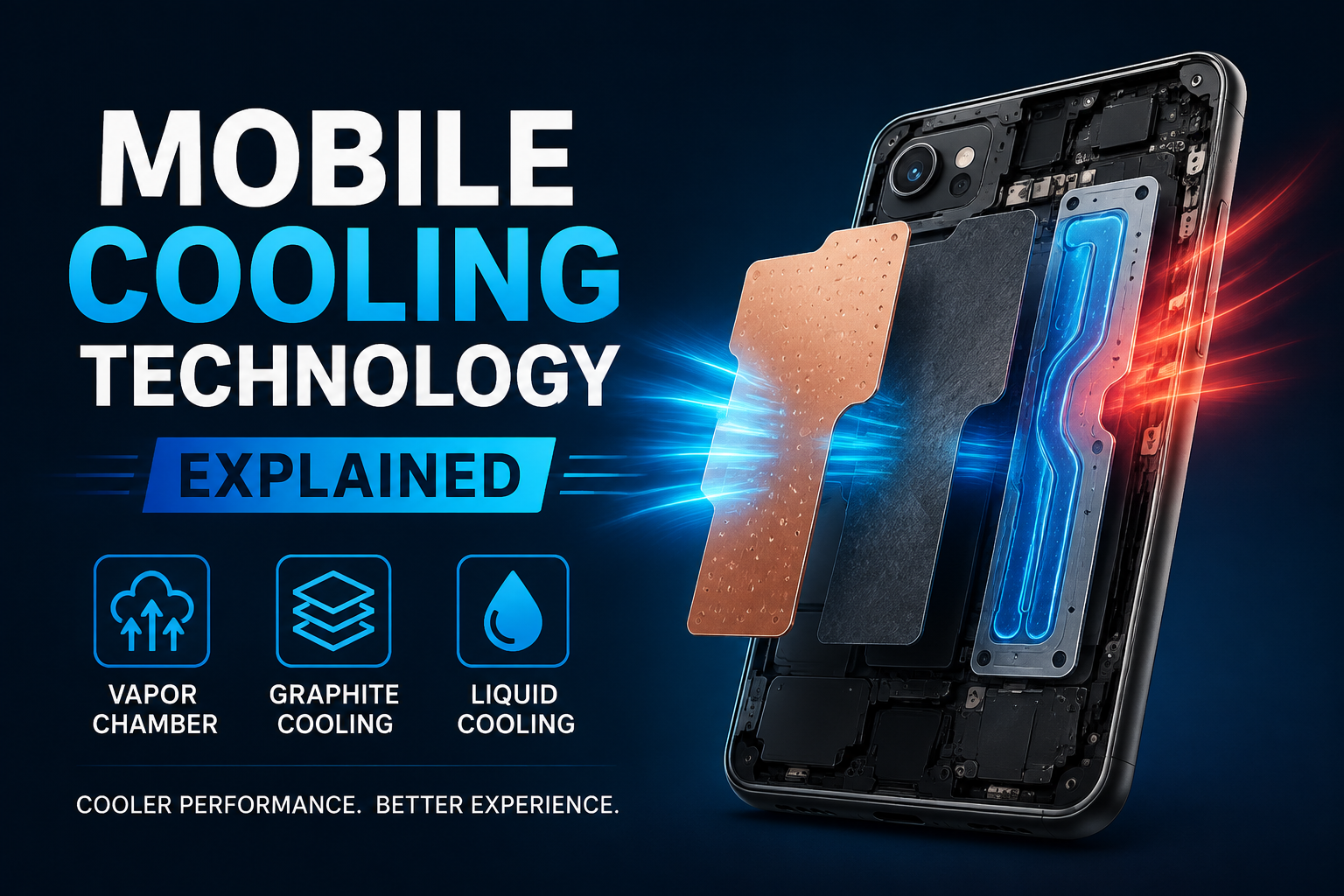
Manufacturers are developing advanced thermal management solutions, including vapor chamber cooling, graphite cooling systems, and liquid cooling in smartphones to improve heat dissipation. These technologies help smartphones maintain stable performance, protect internal components, and deliver a smoother experience during demanding tasks.
In this article, we will explore how smartphone cooling systems work, compare different cooling technologies, and understand why they are becoming essential in modern mobile devices.
Table of Contents
What Is Mobile Cooling Technology?
Mobile Cooling Technology refers to the different hardware and software solutions used in smartphones to control heat generated by internal components.
The main purpose of a cooling system is to move heat away from high-temperature areas, especially the processor, battery, charging system, and camera modules.
Unlike desktop computers, smartphones have limited space for cooling because all components are packed into a thin body. Therefore, manufacturers use special materials and innovative designs to manage heat efficiently.
Why Do Smartphones Need Cooling Systems?
Every smartphone generates heat during normal operation. The processor, graphics unit, modem, battery, and charging circuits consume electrical energy, which creates thermal energy as a by-product.
Small amounts of heat are normal. However, excessive heat can cause:
- Reduced processor performance
- Faster battery degradation
- Lower gaming performance
- Slower charging speeds
- Camera limitations during long recordings
- User discomfort while holding the device
Effective thermal management in smartphones ensures that heat is distributed and removed efficiently.
How Heat Affects Smartphone Performance
Smartphone processors are designed to operate within a specific temperature range. When internal temperatures rise too high, the device activates protective mechanisms.
One important mechanism is thermal throttling.
Thermal throttling reduces processor speed to decrease heat production. While this protects the hardware, users may notice:
- Game lag or frame drops
- Slower application loading
- Reduced multitasking performance
- Longer video processing time
For example, a gaming smartphone may deliver excellent performance during the first few minutes of gameplay. However, without proper cooling, performance may decrease after extended gaming sessions.
Advanced cooling solutions help maintain consistent performance by preventing excessive temperature increases.
Why Do Smartphones Overheat?
Several factors contribute to smartphone heating. As devices become more powerful, heat management has become a major focus for manufacturers.
1. High-Performance Processors
Modern smartphone processors contain billions of transistors and perform millions of calculations every second.
High-performance chips used for gaming, AI applications, and photography require more power, which naturally generates more heat.
Flagship smartphones often include advanced cooling solutions because their processors are designed for intensive workloads.
2. Mobile Gaming
Gaming is one of the biggest causes of smartphone heating.
High-end mobile games require continuous processing from:
- CPU
- GPU
- RAM
- Display system
- Network modem
Games with high-resolution graphics, high refresh rates, and real-time multiplayer features create significant thermal stress.
This is why gaming phones often include advanced gaming phone cooling technology.
3. Camera Recording and AI Processing
Modern smartphone cameras depend heavily on image processing power.
Activities such as:
- 4K and 8K video recording
- Night photography
- AI image enhancement
- Real-time object detection
- Portrait video processing
require continuous processor activity.
Long camera sessions can increase internal temperatures, especially in compact flagship smartphones.
4. 5G Connectivity
5G networks provide faster speeds but require more advanced modem technology.
During weak network conditions, smartphones may increase power usage to maintain connectivity, producing additional heat.
This is especially noticeable during:
- 5G hotspot usage
- Large downloads
- Online gaming
- Video streaming
5. Fast Charging
Fast charging technologies allow smartphones to recharge quickly, but higher charging speeds generate additional heat.
Charging systems must carefully control:
- Voltage
- Current flow
- Battery temperature
Modern phones use software algorithms and hardware protection systems to manage charging heat.
6. Background Applications
Multiple applications running in the background can increase processor activity.
Examples include:
- Cloud synchronization
- Location tracking
- Social media apps
- Automatic updates
- Background AI features
These processes consume energy and may increase device temperature.
Types of Mobile Cooling Technologies
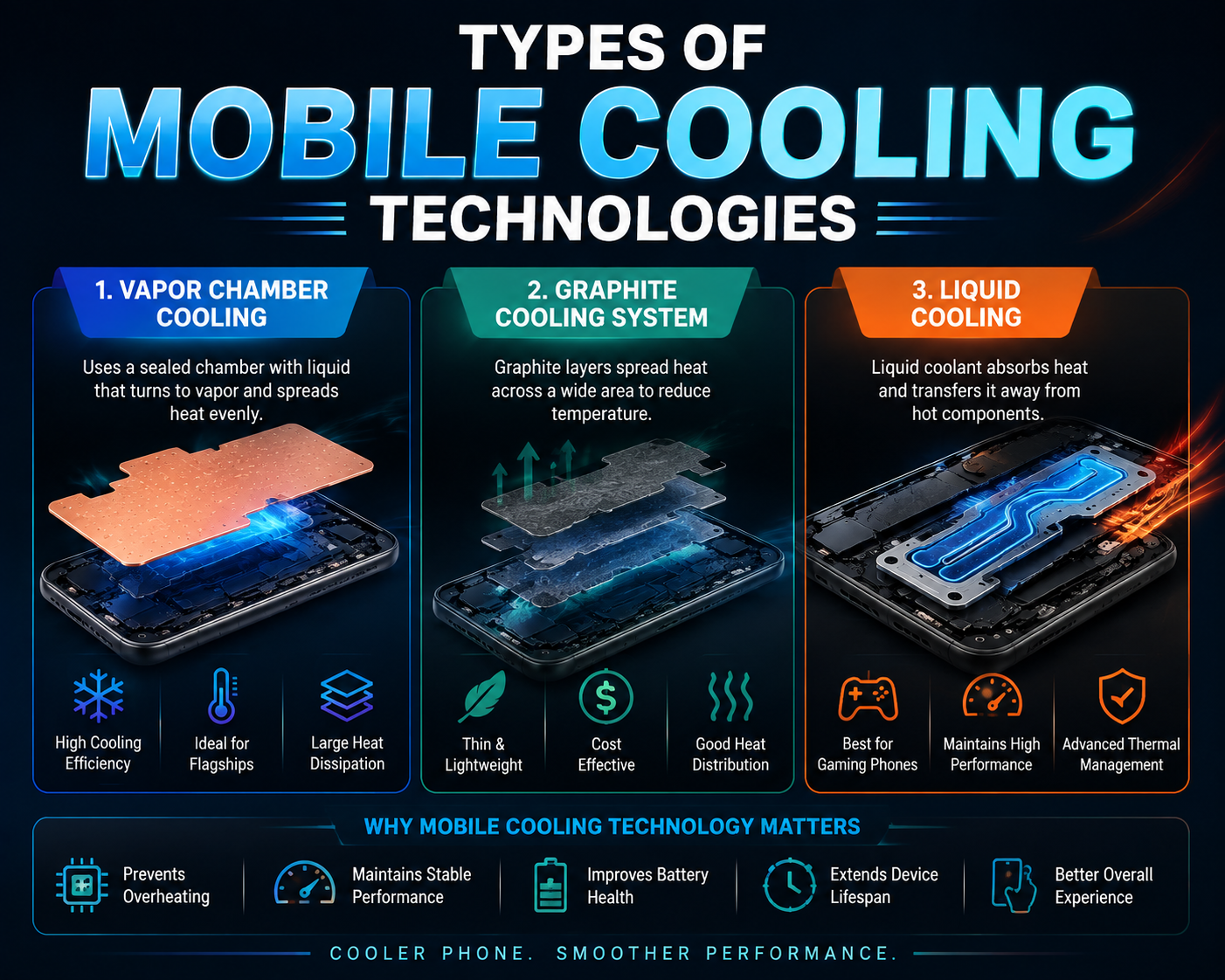
Smartphone manufacturers use different cooling approaches depending on device category, price range, and performance requirements.
The most common technologies include:
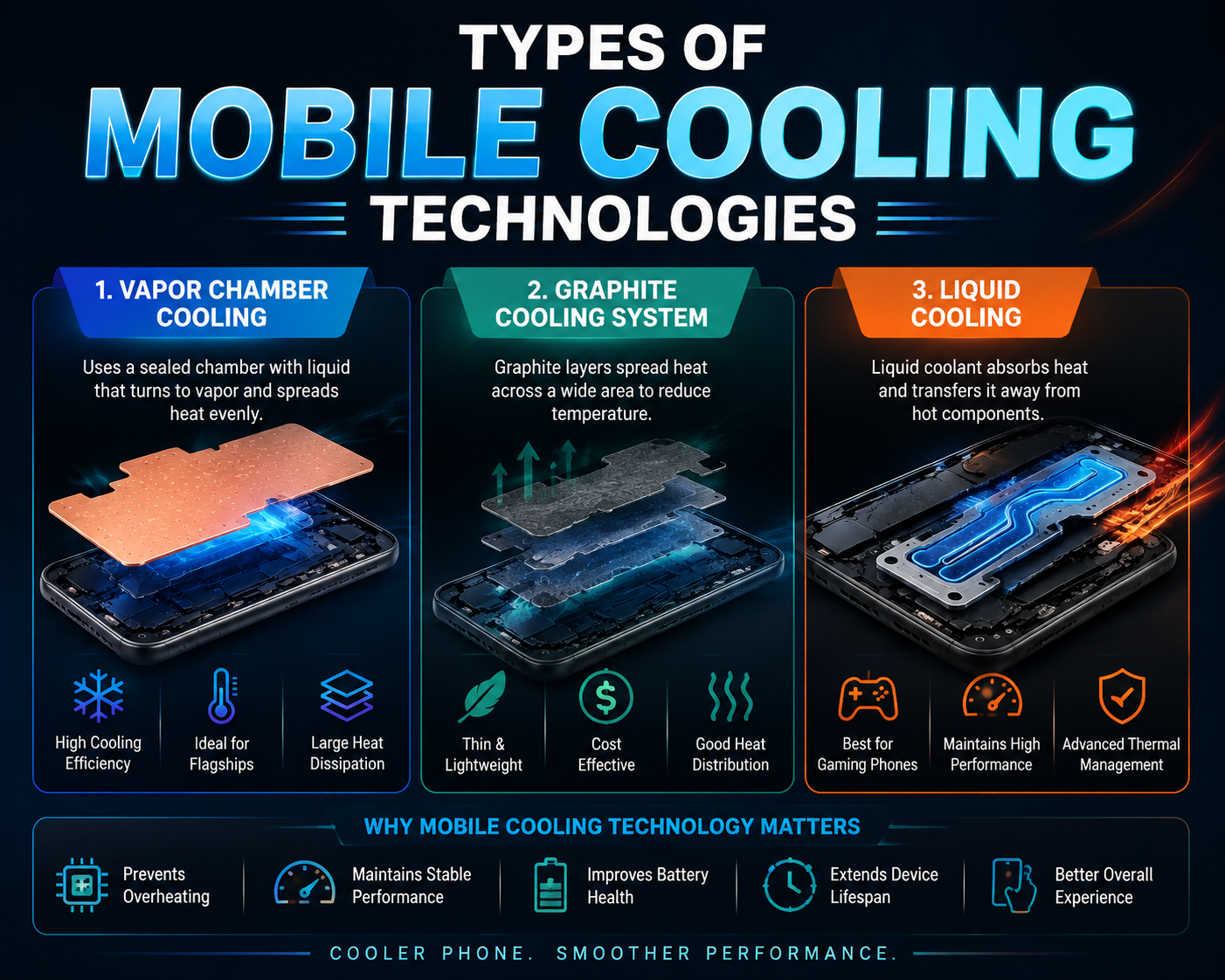
- Vapor Chamber Cooling
- Graphite Cooling System
- Liquid Cooling in Smartphones
Each technology has different advantages and limitations.
A. Vapor Chamber Cooling Technology
What Is a Vapor Chamber?
A vapor chamber is one of the most advanced cooling solutions used in premium smartphones.
It is a thin metal chamber containing a small amount of liquid that helps transfer heat away from high-temperature components.
Unlike traditional heat spreaders, vapor chambers can distribute heat across a larger surface area more efficiently.
How Vapor Chamber Cooling Works
The working process is based on phase change technology.
When the processor generates heat:
- The liquid inside the vapor chamber absorbs heat.
- The liquid turns into vapor.
- The vapor moves toward cooler areas of the chamber.
- The vapor releases heat and turns back into liquid.
- The cycle repeats continuously.
This process allows heat to move quickly away from the processor.
Advantages of Vapor Chamber Cooling
Better Heat Distribution
Vapor chambers spread heat across a wider area, preventing concentrated hot spots.
Improved Gaming Performance
During long gaming sessions, vapor chamber cooling helps maintain stable processor speeds.
Suitable for Powerful Processors
Flagship chipsets generate significant heat, making vapor chambers ideal for premium smartphones.
Compact Design
They provide strong cooling performance without requiring large external cooling systems.
Limitations of Vapor Chamber Cooling
Despite being highly effective, vapor chambers have some limitations:
- Higher manufacturing cost
- Require careful internal design
- More commonly available in premium devices
Budget smartphones usually use simpler cooling solutions due to cost constraints.
Graphite Cooling System
What Is a Graphite Cooling System?
A Graphite Cooling System is one of the most widely used thermal management solutions in modern smartphones. It uses thin graphite sheets placed inside the phone to spread heat away from important components such as the processor, battery, and charging circuits.
Graphite is a special material with excellent thermal conductivity. It can quickly transfer heat across its surface area, helping reduce temperature concentration in specific parts of the smartphone.
Compared with traditional metal heat spreaders, graphite sheets are lightweight, extremely thin, and suitable for slim smartphone designs.
This makes graphite cooling an important part of Mobile Cooling Technology, especially in mid-range and premium smartphones.
How Graphite Cooling Works in Smartphones
A smartphone generates heat mainly from the chipset and battery. Without proper heat distribution, certain areas inside the phone can become extremely hot.
The graphite cooling process works in a simple way:
- Heat is generated by internal components.
- Graphite sheets absorb and spread the heat horizontally.
- Heat moves across a larger surface area.
- The temperature difference between hot and cooler areas is reduced.
Unlike vapor chamber cooling, graphite does not use liquid or vapor movement. Instead, it works through heat spreading.
This passive cooling method helps smartphones maintain better temperature balance during daily usage.
Advantages of Graphite Cooling Technology
Thin and Lightweight Design
One major advantage of graphite cooling is its extremely thin structure.
Smartphone manufacturers can add multiple graphite layers without significantly increasing device thickness or weight.
Cost-Effective Solution
Graphite cooling is cheaper to manufacture compared with advanced vapor chamber systems.
Because of this, it is commonly found in:
- Mid-range smartphones
- Affordable flagship models
- Everyday performance devices
Improved Heat Distribution
A graphite cooling system prevents heat from staying concentrated around the processor area.
This improves comfort when users:
- Watch videos for long periods
- Use social media applications
- Browse the internet
- Play casual games
Better Battery Temperature Control
Since excessive heat affects battery health, graphite cooling helps maintain safer operating temperatures.
Graphite Cooling vs Vapor Chamber Cooling
Although both technologies are designed to manage smartphone heat, they work differently.
A graphite cooling system mainly spreads heat across the device, while vapor chamber cooling actively transfers heat using liquid evaporation and condensation.
Vapor chambers usually provide better cooling performance under heavy workloads, but graphite solutions offer a more affordable and compact design.
Many modern smartphones combine both technologies to create an efficient Mobile Cooling Technology solution.
C. Liquid Cooling Technology in Smartphones
What Is Liquid Cooling in Smartphones?
The term Liquid Cooling in Smartphones can sound similar to desktop PC cooling systems, but smartphone liquid cooling works differently.
Traditional computers use pumps, large radiators, and circulating coolant systems. Smartphones cannot use these large components because of their compact size.
Instead, smartphone manufacturers use small liquid-based cooling chambers, heat pipes, or sealed cooling solutions to transfer heat efficiently.
How Smartphone Liquid Cooling Works
In mobile devices, liquid cooling usually involves a sealed system containing a special cooling liquid.
The process works as follows:
- The processor produces heat.
- The cooling liquid absorbs thermal energy.
- Heat moves through the cooling chamber or pipe.
- The heat is transferred away from the chipset area.
- The cooling cycle continues.
This technology helps gaming smartphones handle long periods of high-performance usage.
Benefits of Liquid Cooling in Smartphones
Excellent Performance During Heavy Usage
Liquid cooling is particularly useful for smartphones designed for:
- Competitive gaming
- High-frame-rate gameplay
- Extended video recording
- Heavy AI processing
Maintains Stable Performance
During demanding tasks, heat can force processors to slow down.
Advanced liquid cooling solutions help maintain consistent performance by controlling temperature more effectively.
Better Gaming Experience
Gaming phones require strong thermal solutions because games continuously use CPU and GPU resources.
Liquid cooling helps reduce:
- Frame drops
- Performance instability
- Excessive device temperature
Challenges of Smartphone Liquid Cooling
Although liquid cooling provides excellent thermal performance, it has some challenges:
Higher Cost
Advanced liquid cooling systems increase manufacturing complexity and device cost.
Space Requirements
Smartphones have limited internal space, making cooling design more difficult.
Not Necessary for Every User
Normal smartphone users who mainly browse, stream videos, and use social media may not require advanced liquid cooling.
Comparison: Vapor Chamber vs Graphite vs Liquid Cooling
| Feature | Vapor Chamber Cooling | Graphite Cooling System | Liquid Cooling in Smartphones |
|---|---|---|---|
| Cooling Efficiency | Very High | Medium | Very High |
| Heat Transfer Method | Liquid vapor phase change | Heat spreading through graphite layers | Liquid-based heat transfer |
| Cost | Higher | Lower | Higher |
| Common Usage | Flagship smartphones | Budget to premium phones | Gaming smartphones |
| Gaming Performance | Excellent | Good | Excellent |
| Heat Dissipation Capability | Advanced | Moderate | Advanced |
| Battery Temperature Control | Very Good | Good | Very Good |
| Design Complexity | Medium to High | Low | High |
The best cooling technology for mobile phones depends on the device category.
For flagship smartphones, vapor chambers provide excellent thermal control. For everyday smartphones, graphite cooling offers a balanced solution. Gaming smartphones often combine vapor chambers, graphite layers, and additional cooling technologies.
How Mobile Cooling Technology Improves Smartphone Performance
Modern Mobile Cooling Technology does more than reduce heat. It directly improves the overall smartphone experience.
1. Better Gaming Performance
Gaming requires continuous processor and graphics performance.
Without proper cooling, smartphones may reduce performance to control temperature.
Advanced cooling systems allow:
- Higher frame rate stability
- Longer gaming sessions
- Reduced performance drops
This is why gaming smartphones invest heavily in advanced thermal solutions.
2. Stable Processor Speed
Processors are designed to deliver maximum performance within safe temperature limits.
Effective cooling helps maintain higher clock speeds for longer periods.
This improves:
- App performance
- Multitasking
- Video editing
- AI processing
3. Improved Battery Health
Heat is one of the biggest factors affecting battery lifespan.
When smartphone temperatures remain controlled, battery stress is reduced.
A good cooling system supports:
- Better battery efficiency
- Safer charging
- Longer battery lifespan
4. Longer Device Lifespan
Excessive heat can damage internal components over time.
Efficient Mobile Cooling Technology protects:
- Processor
- Battery
- Memory chips
- Charging components
This helps smartphones remain reliable for a longer period.
5. Better Camera Performance
Modern cameras depend heavily on powerful processors.
During long recording sessions, especially 4K or 8K video recording, heat can affect performance.
Better cooling helps smartphones maintain:
- Stable video recording
- Faster image processing
- Consistent camera quality
Gaming Phones and Advanced Cooling Systems

Gaming smartphones represent the highest level of Mobile Cooling Technology because they are designed for continuous high-performance workloads.
Unlike regular smartphones, gaming phones often include multiple cooling layers.
Why Gaming Phones Need Advanced Cooling
High-end mobile games constantly use:
- CPU power
- GPU performance
- High refresh rate displays
- Network connectivity
This creates significant heat.
Without proper cooling, users may experience:
- Frame rate drops
- Touch response delay
- Reduced gaming performance
Multi-Layer Cooling Systems
Modern gaming phones often combine several technologies:
- Large vapor chamber cooling plates
- Multiple graphite layers
- Thermal paste materials
- Heat dissipation frames
- External cooling accessories
This combination creates advanced gaming phone cooling technology.
Cooling Fans and Additional Technologies
Some gaming smartphones include external or built-in cooling fans.
These active cooling systems provide additional airflow to reduce temperatures during extreme gaming sessions.
Future gaming devices may continue improving with smarter AI-based temperature control and advanced materials.
Future of Mobile Cooling Technology
The future of smartphone thermal management will focus on making devices more powerful while keeping temperatures under control.
Upcoming improvements may include:
AI-Based Thermal Management
Artificial intelligence can analyze usage patterns and adjust performance dynamically.
AI-powered cooling systems may:
- Predict heating situations
- Optimize processor performance
- Manage power consumption automatically
Advanced Cooling Materials
Researchers are exploring new materials such as:
- Graphene-based cooling solutions
- Advanced thermal compounds
- Lightweight heat spreaders
These materials could improve heat transfer while keeping smartphones thinner.
Improved Vapor Chambers
Future vapor chamber designs may become larger, thinner, and more efficient.
This will help flagship smartphones handle powerful processors and advanced AI workloads.
Better Cooling for Foldable Phones
Foldable smartphones create new thermal challenges because of flexible designs and limited internal space.
Future Mobile Cooling Technology will play an important role in making foldable phones more durable and powerful.
Cooling Solutions for AI Smartphones
AI smartphones require continuous processing for features like:
- Real-time translation
- AI image generation
- Voice assistants
- Smart photography
Advanced thermal systems will become increasingly important as AI features become more common.
How Users Can Reduce Smartphone Heating
While advanced Mobile Cooling Technology helps smartphones manage heat efficiently, users also play an important role in preventing overheating.
Simple usage habits can improve smartphone temperature control and protect device performance.
1. Avoid Using Smartphones in Extreme Temperatures
Environmental temperature directly affects smartphone heating.
Using a phone under direct sunlight, inside a hot car, or in extremely warm environments can increase internal temperature quickly.
For better phone overheating prevention:
- Avoid keeping your phone under direct sunlight
- Keep the device in a cool place
- Remove unnecessary heat sources around the phone
2. Use Original Chargers and Certified Accessories
Charging generates heat, especially with fast charging technology.
Using unofficial chargers may cause:
- Unstable power delivery
- Excessive heat generation
- Battery damage
Always use original chargers or certified charging accessories recommended by the smartphone manufacturer.
3. Reduce Unnecessary Background Applications
Many apps continue running in the background and consume processor resources.
This can increase:
- CPU activity
- Battery usage
- Device temperature
Users should regularly:
- Close unused applications
- Disable unnecessary background permissions
- Remove unwanted apps
4. Keep Software Updated
Software updates often include improvements in:
- Power management
- Processor optimization
- Thermal control algorithms
Manufacturers continuously improve smartphone efficiency through software updates.
A properly optimized operating system works together with hardware-based Mobile Cooling Technology.
5. Avoid Heavy Gaming While Charging
Gaming while charging creates two major heat sources:
- Processor heat from gaming
- Charging heat from the battery
Together, they can significantly increase smartphone temperature.
For the best performance and battery health:
- Avoid intensive gaming during charging
- Allow the device to cool before extended gaming sessions
- Use optimized gaming modes when available
Key Takeaways: Mobile Cooling Technology
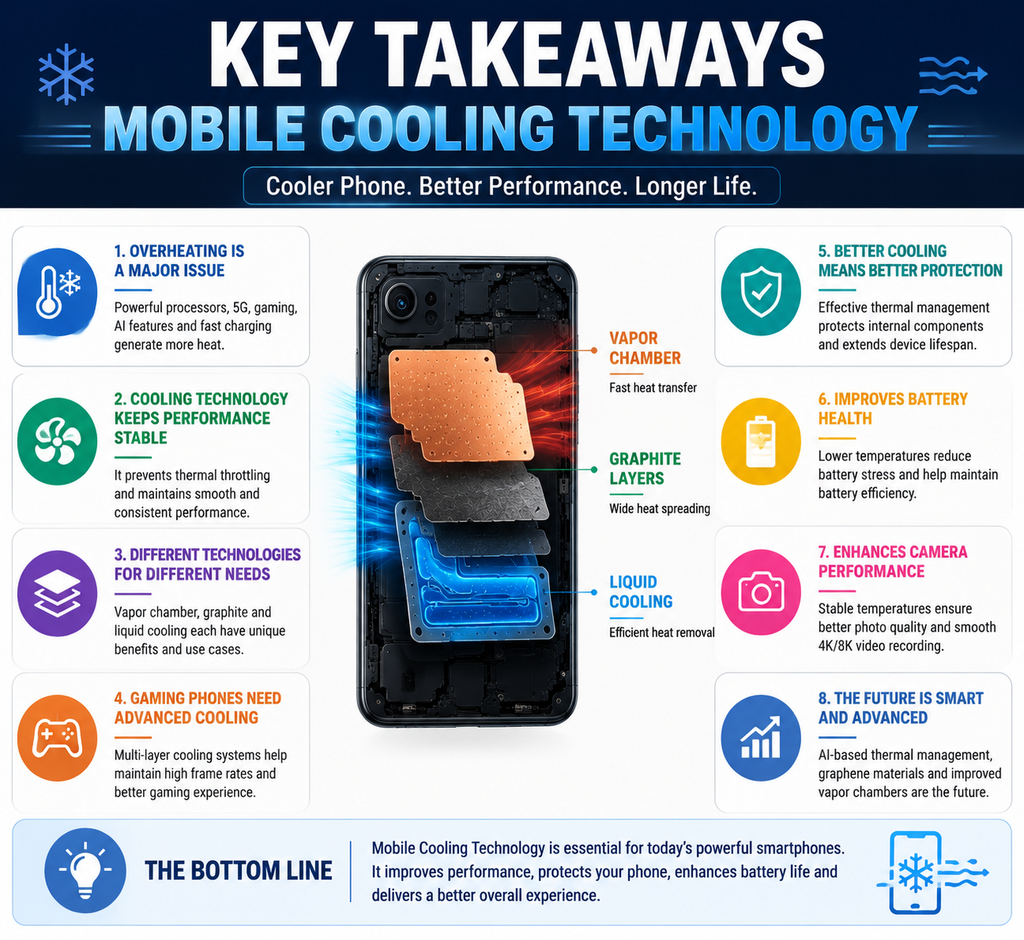
- Mobile Cooling Technology has become essential as smartphones become more powerful.
- Modern processors, AI features, gaming, 5G, and fast charging increase heat generation.
- Vapor chamber cooling provides advanced heat transfer for flagship smartphones.
- Graphite cooling systems offer an affordable and lightweight thermal solution.
- Liquid cooling in smartphones improves performance during heavy workloads.
- Gaming phones use advanced multi-layer cooling systems for stable performance.
- Better thermal management improves battery health and device lifespan.
- Future cooling solutions will focus on AI optimization, graphene materials, and smarter thermal designs.
Frequently Asked Questions (FAQ)
1. What is the best cooling technology for smartphones?
The best cooling technology depends on smartphone usage.
For flagship and gaming smartphones, vapor chamber cooling is currently one of the most effective solutions because it provides excellent heat transfer.
For regular smartphones, graphite cooling systems offer a good balance between performance, cost, and design.
The future of Mobile Cooling Technology may combine multiple cooling methods for better results.
2. Is vapor chamber cooling better than graphite cooling?
Yes, vapor chamber cooling generally provides better thermal performance than traditional graphite cooling.
A vapor chamber actively transfers heat using liquid evaporation and condensation, while graphite mainly spreads heat across its surface.
However, graphite cooling is thinner, cheaper, and suitable for many everyday smartphones.
3. Do gaming phones need liquid cooling?
Gaming phones benefit significantly from liquid cooling because they handle continuous high-performance workloads.
Advanced cooling systems help gaming smartphones maintain stable performance during long gaming sessions.
However, not every user needs liquid cooling. Casual smartphone users can perform well with standard thermal solutions.
4. Can cooling technology improve battery life?
Cooling technology does not directly increase battery capacity, but it can improve battery lifespan.
Excessive heat accelerates battery degradation.
By controlling temperature, advanced cooling systems help maintain battery health and improve long-term device reliability.
5. Why do smartphones heat during gaming?
Smartphones heat during gaming because games require continuous processing power from:
- CPU
- GPU
- Display
- Network components
High graphics settings and long gaming sessions create more heat, making effective gaming phone cooling technology important.
6. Which phones have the best cooling systems?
Many premium and gaming smartphones include advanced cooling solutions.
Examples include:
- Gaming smartphones with large vapor chambers
- Flagship phones using advanced thermal management
- Performance-focused devices with multi-layer cooling designs
Manufacturers continue improving cooling systems as mobile processors become more powerful.
7. Is liquid cooling in smartphones the same as PC liquid cooling?
No.
PC liquid cooling systems usually use pumps, radiators, and circulating coolant.
Smartphone liquid cooling uses compact sealed systems designed specifically for thin mobile devices.
The goal is the same — removing heat efficiently — but the implementation is completely different.
Final Conclusion: Why Mobile Cooling Technology Is Important
Smartphones continue becoming more powerful every year. Modern devices now handle tasks that were previously limited to computers, including high-end gaming, professional photography, AI processing, and advanced multitasking.
However, increased performance creates more heat, making efficient thermal management more important than ever.
Mobile Cooling Technology helps smartphones maintain performance, protect internal components, improve battery health, and provide a smoother user experience.
Among current cooling solutions:
- Vapor chamber cooling delivers excellent performance for flagship devices.
- Graphite cooling systems provide a thin and affordable solution for everyday smartphones.
- Liquid cooling in smartphones offers advanced thermal control for gaming and high-performance devices.
The future of smartphone cooling will bring smarter AI-based temperature management, advanced materials like graphene, improved vapor chambers, and innovative solutions for foldable and AI-powered smartphones.
As mobile processors continue evolving, cooling technology will remain a key factor in creating faster, more reliable, and more efficient smartphones.
Research & Sources:
This article is prepared using research from thermal engineering studies, smartphone cooling technology analysis, and electronics heat management publications. Key references include studies on ultra-thin vapor chambers, graphite heat spreaders, and advanced thermal solutions for mobile devices.