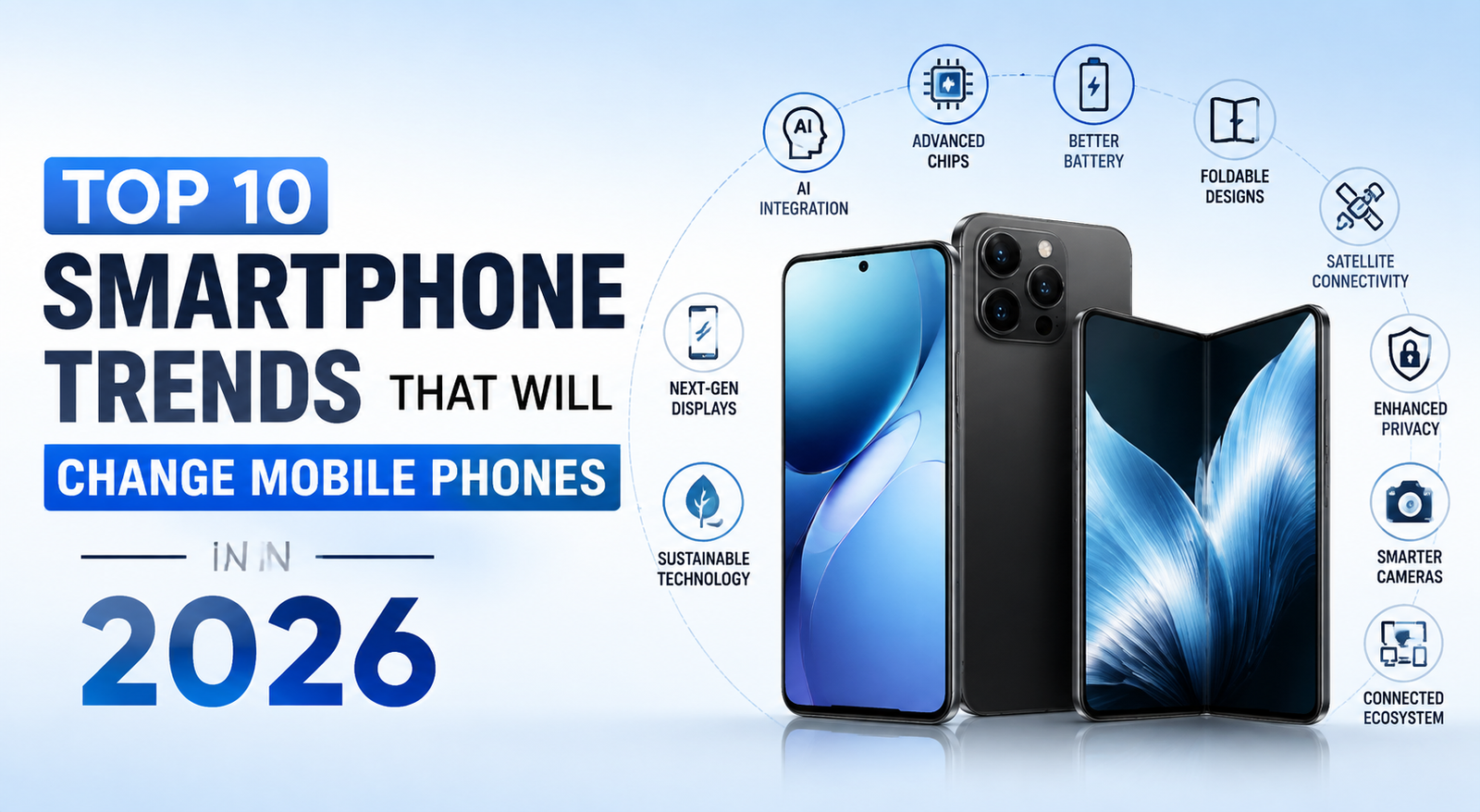
Introduction: The Future of Smartphones Is Changing Faster Than Ever
Smartphones have become an essential part of everyday life, but the mobile industry is entering a completely new phase in 2026. Instead of focusing only on bigger displays, higher megapixel cameras, and faster processors, smartphone manufacturers are now building intelligent devices that can understand users, perform tasks automatically, and connect seamlessly with the digital world.
The biggest Smartphone Trends 2026 will be driven by artificial intelligence, advanced semiconductor technology, improved battery solutions, flexible displays, privacy-focused features, and smarter connectivity.
Modern smartphones are becoming more than communication devices. They are evolving into personal AI assistants, productivity tools, entertainment hubs, and intelligent companions.
Let’s explore the top 10 smartphone trends that will change mobile phones in 2026.
Why Smartphone Trends 2026 Are Important for Future Mobile Technology
The Smartphone Trends 2026 represent a major shift in how people use mobile devices. Smartphones are no longer improving only through better processors, cameras, or displays. The next generation of smartphones will focus on intelligence, automation, connectivity, and personalized user experiences.
These Smartphone Trends 2026 show that mobile phones are becoming smarter digital companions capable of understanding user behavior, improving productivity, enhancing entertainment, and providing stronger security. From AI-powered features to advanced battery technology, every innovation is designed to make smartphones more useful in everyday life.
For consumers planning to buy a new smartphone, understanding the latest Smartphone Trends 2026 can help them choose devices that offer better performance, longer lifespan, and future-ready technology.
Table of Contents
1. AI Smartphones Will Become the New Standard
Artificial Intelligence will be the biggest transformation in smartphones during 2026.
Earlier, AI features were mainly used for camera improvements, voice assistants, and photo editing. However, next-generation smartphones are moving toward AI-powered personal assistants that can understand user habits and complete tasks automatically.
AI smartphones in 2026 will offer:
- Real-time language translation
- AI-generated content creation
- Smart email and message suggestions
- Personalized recommendations
- Intelligent photo and video editing
- Automated daily tasks
The biggest change is that AI will work directly on the smartphone through dedicated Neural Processing Units (NPUs), reducing dependence on cloud servers and improving speed and privacy.
Why It Matters
Your smartphone will not just respond to commands. It will predict your needs and help you complete tasks faster.
2. On-Device AI Processing Will Replace Traditional Smartphone Performance
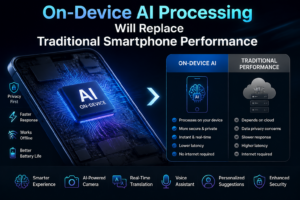
One of the most important future smartphone technology trends is the growth of on-device AI.
New smartphone processors are being designed with powerful AI engines that allow phones to process information locally.
Benefits of on-device AI include:
- Faster AI responses
- Better privacy protection
- Lower internet dependency
- Improved battery efficiency
- More personalized experiences
Companies are increasingly developing custom smartphone chips to improve AI performance and device optimization.
In the future, smartphone performance will not be measured only by CPU speed or RAM. AI processing capability will become a major buying factor.
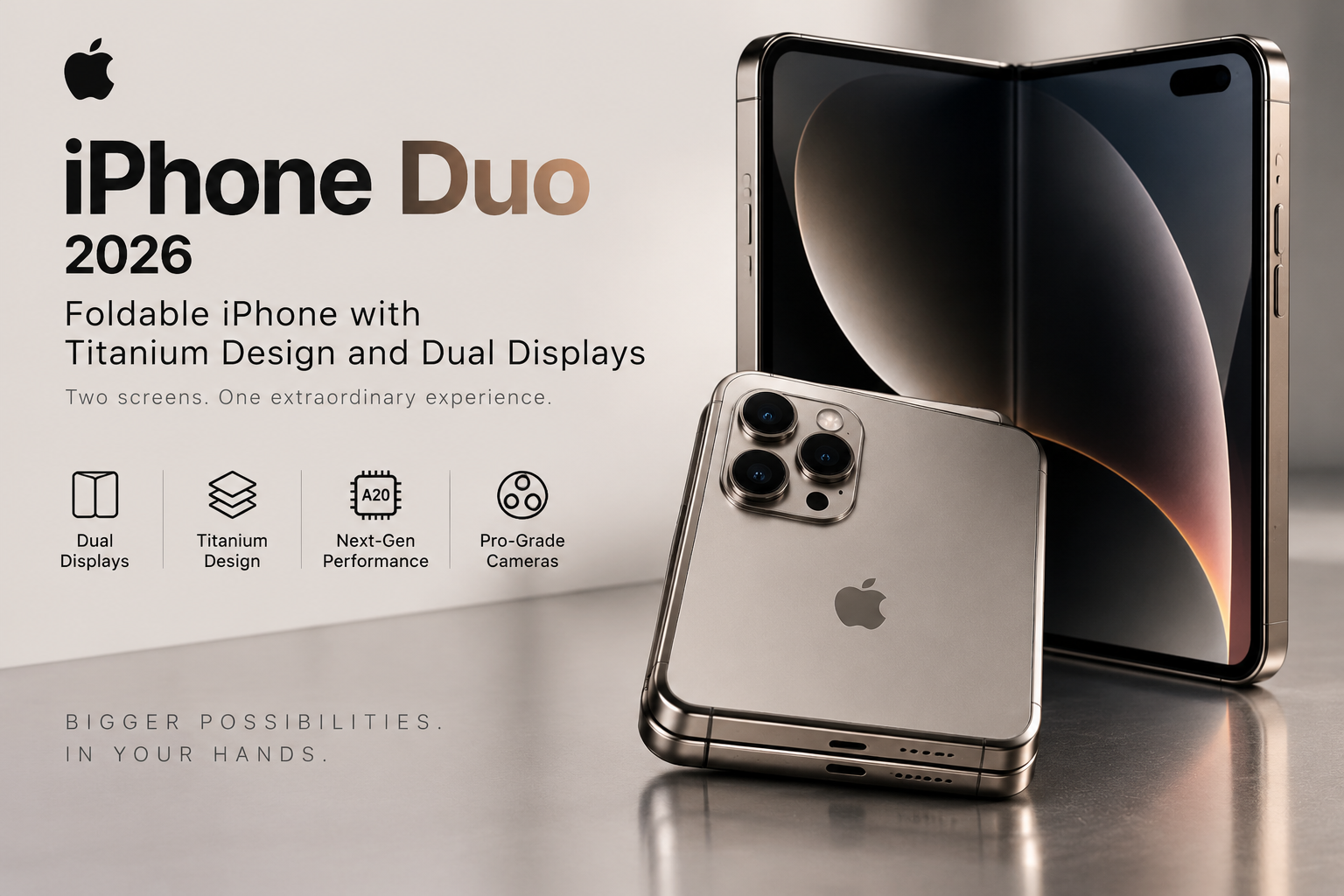
3. Foldable Smartphones Will Become More Practical
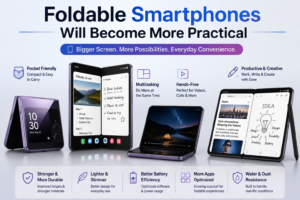
Foldable smartphones are moving from experimental devices to premium everyday phones.
In 2026, foldable phones will focus on:
- Thinner designs
- Stronger hinges
- Reduced screen crease
- Better durability
- Improved multitasking features
Foldable devices are becoming attractive because they combine smartphone portability with tablet-like screen experiences.
Future foldable phones may replace traditional large-screen smartphones for professionals, creators, and business users.
Examples of Future Uses:
- Editing videos on a larger screen
- Running multiple apps simultaneously
- Using phones as mini workstations
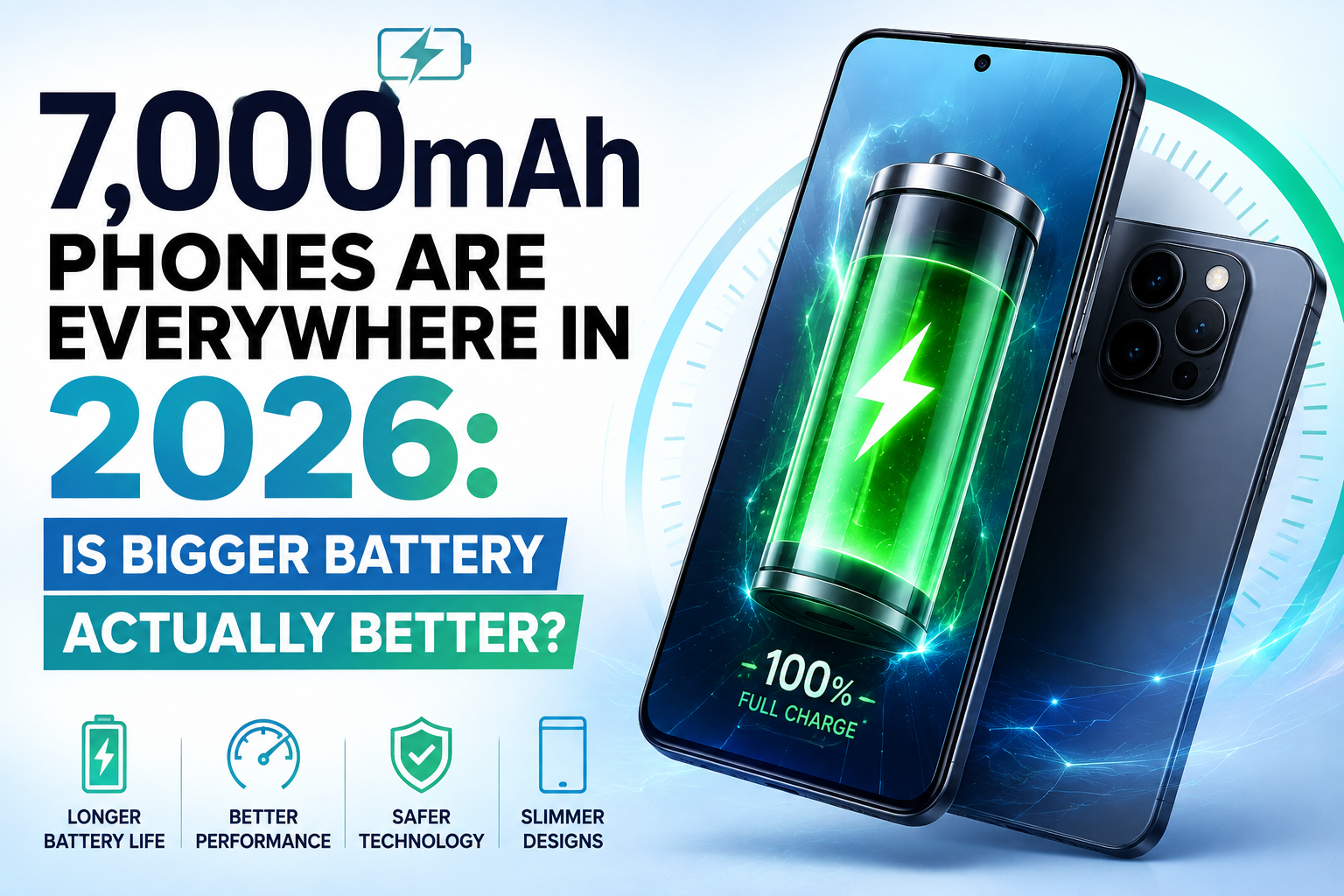
4. Battery Technology Will Become a Major Innovation Area
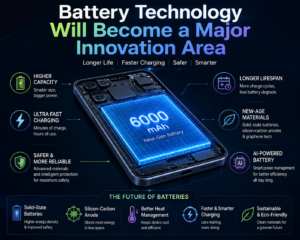
Battery life remains one of the biggest concerns for smartphone users.
As smartphones become more powerful with AI features, high-refresh-rate displays, and advanced cameras, battery technology must improve.
In 2026, smartphone brands will focus on:
- Silicon-carbon battery technology
- Higher battery capacity
- Faster charging speeds
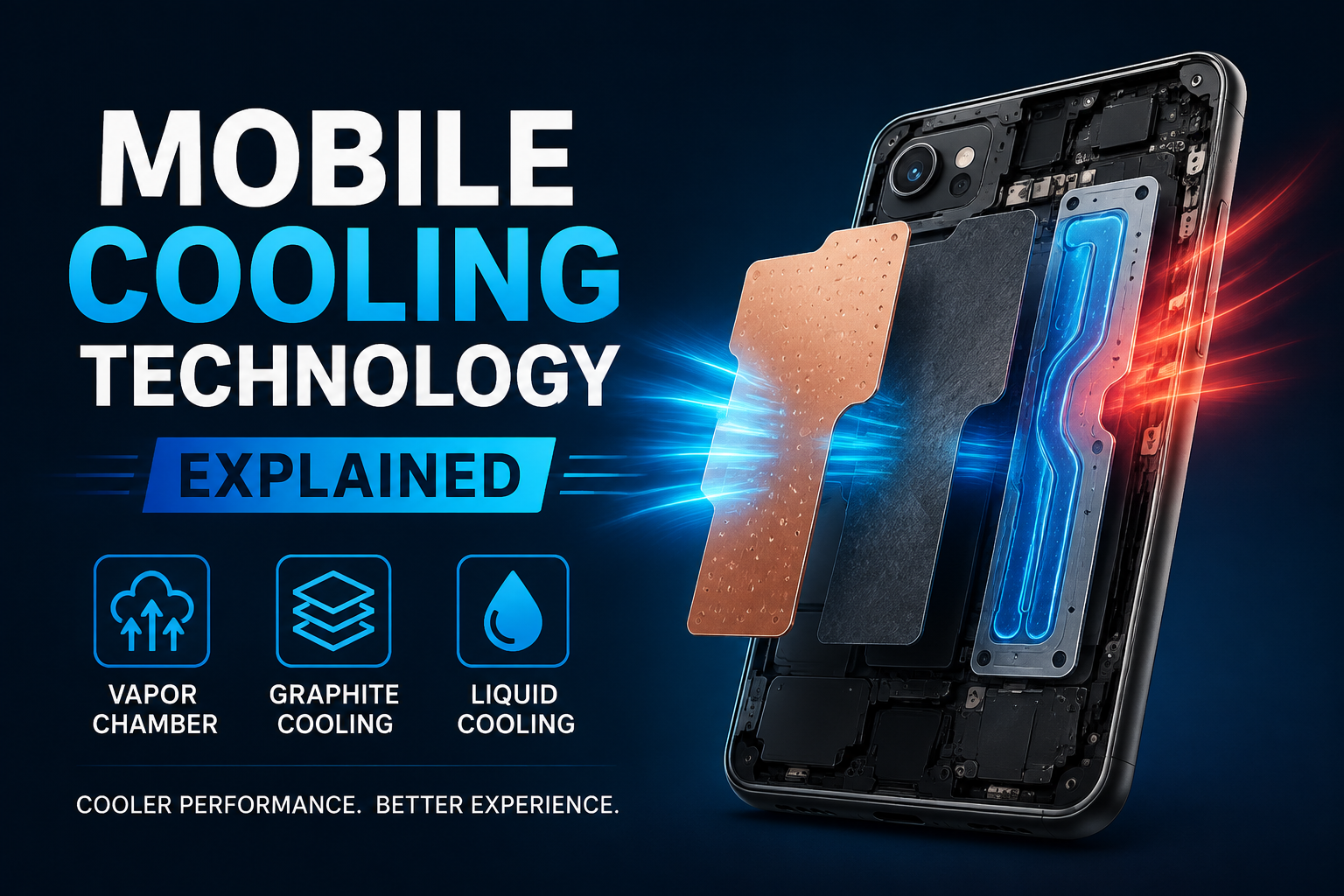
- Better thermal management
- Longer battery lifespan
New battery materials allow manufacturers to increase energy density without making phones much thicker.
The future goal is simple:
More power, faster charging, and longer-lasting batteries.
5. Satellite Connectivity Will Expand Beyond Emergency Features
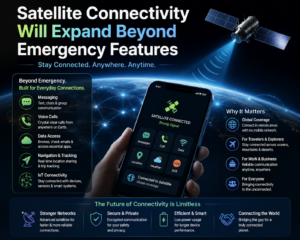
Satellite connectivity is becoming one of the most interesting smartphone innovations.
Previously, satellite communication was mainly available for emergency situations. In 2026, manufacturers and network providers are working toward broader satellite-based communication.
Future possibilities include:
- Messaging without mobile networks
- Better rural connectivity
- Emergency communication during disasters
- Connectivity in remote locations
This technology can especially benefit users living in areas with weak network coverage.
6. Smartphone Cameras Will Become More Intelligent
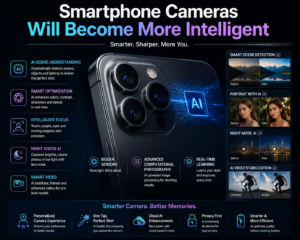
Smartphone camera competition will move beyond megapixels.
In 2026, camera improvements will focus on AI-powered photography.
Expected camera innovations:
- AI scene recognition
- Better low-light photography
- Professional-level video recording
- Automatic photo enhancement
- Advanced image processing
AI will help users capture professional-quality photos without needing photography skills.
The smartphone camera will become more like an intelligent photography assistant.
7. Privacy and Security Will Become Major Selling Points

As smartphones collect more personal information, privacy will become a critical feature.
Future smartphones will include:
- Advanced biometric security
- Secure AI processing
- Better app permission control
- Private computing features
- Improved data protection
Consumers will increasingly choose smartphones that protect their personal information.
Security will become as important as camera quality and performance.
8. More Powerful Smartphone Chips and Custom Processors
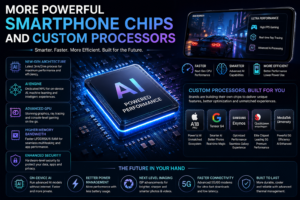
Processor technology will continue to improve in 2026.
Smartphone manufacturers are focusing on:
- Faster performance
- Lower power consumption
- Better AI acceleration
- Improved gaming performance
Advanced chip designs will help smartphones handle tasks that previously required computers.
Future smartphones may perform professional-level work such as:
- Video editing
- 3D rendering
- AI content generation
- Advanced gaming
9. Sustainable and Repairable Smartphones Will Grow
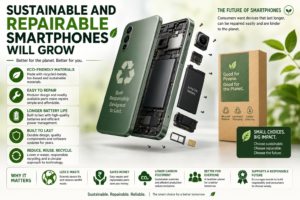
Environmental concerns are influencing smartphone design.
More companies are focusing on:
- Recycled materials
- Longer software support
- Repair-friendly designs
- Replaceable components
Sustainable smartphone designs aim to reduce electronic waste and increase device lifespan. Some manufacturers are already promoting modular and repairable phone concepts.
Consumers are expected to consider durability and sustainability while purchasing smartphones.
10. Smartphones Will Become the Center of a Connected Digital Ecosystem
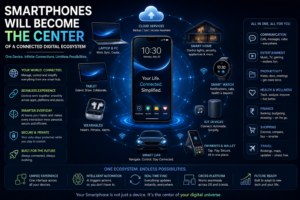
The smartphone of 2026 will not work alone.
It will connect with:
- Smart watches
- Smart glasses
- Smart home devices
- Cars
- AI assistants
- Cloud services
The smartphone will become the control center of a connected lifestyle.
Future users may manage their entire digital environment through one intelligent device.
Smartphone Trends 2026: Quick Summary Table
| Trend | Impact on Future Smartphones |
| AI Smartphones | Smarter personal assistance |
| On-device AI | Faster and more private processing |
| Foldable Phones | Bigger screens in compact designs |
| Advanced Batteries | Longer usage and faster charging |
| Satellite Connectivity | Communication anywhere |
| AI Cameras | Professional photography experience |
| Privacy Technology | Safer personal data |
| Advanced Chips | Computer-level performance |
| Sustainable Phones | Longer device lifespan |
| Connected Ecosystem | Smarter digital lifestyle |
How Smartphone Trends 2026 Will Influence Smartphone Buying Decisions
The upcoming Smartphone Trends 2026 will significantly influence how consumers compare and purchase mobile phones. In the past, buyers mainly focused on camera megapixels, storage capacity, and processor speed. However, future smartphone buyers will consider AI capabilities, battery efficiency, software support, privacy features, and smart connectivity.
Brands that successfully adopt these Smartphone Trends 2026 will have a stronger advantage in the competitive mobile market. Users will increasingly prefer smartphones that can adapt to their needs, provide intelligent assistance, and deliver a complete digital experience rather than just basic communication features.
Understanding these changes will help consumers make smarter decisions and prepare for the future of mobile technology.
What Will Make a Smartphone Future-Ready in 2026?
With smartphone technology developing rapidly, buying a new phone is no longer simply about choosing the device with the highest specifications. A future-ready smartphone should provide a balanced combination of performance, software support, battery efficiency, AI capabilities, camera quality, connectivity, and security.
One important factor is long-term software support. A smartphone that receives operating system updates and security patches for several years can remain useful for much longer. This is especially important because many modern smartphone features depend on software improvements rather than hardware upgrades alone.
Another important consideration is AI capability. As artificial intelligence becomes deeply integrated into mobile operating systems, smartphones with capable AI hardware may receive more advanced features over time. Users may increasingly look at the AI processing capability of a device when comparing smartphones.
Battery technology will also play an important role. Consumers are becoming more interested in phones that can provide a full day of heavy usage while maintaining fast charging and good battery health over several years.
Therefore, a future-ready smartphone should not be judged by a single specification. The overall combination of hardware, software, connectivity, security, and long-term support will determine how valuable the device remains.
How AI Could Change Everyday Smartphone Usage
Artificial intelligence could become one of the most noticeable changes in everyday smartphone usage. Instead of requiring users to manually open different applications and perform multiple steps, AI-powered features could simplify many routine activities.
For example, users may be able to summarize long messages, organize information, translate conversations, edit photographs, create content, or search for information using natural language. This could make smartphones easier to use, particularly for people who are not comfortable navigating complicated applications.
AI could also make smartphones more personalized. The device may learn common usage patterns and provide useful suggestions based on the user’s activities. However, personalization will need to be balanced with privacy because smartphones can contain highly sensitive personal information.
This means the future of smartphone AI will not depend only on how powerful the technology is. Trust, privacy, accuracy, and ease of use will also determine whether consumers adopt these features regularly.
Smartphone Software Will Become More Important
Hardware specifications have traditionally dominated smartphone marketing, but software is becoming equally important. A powerful processor and high-resolution camera are useful only when the software can take advantage of them effectively.
Modern smartphones increasingly depend on software optimization for photography, gaming, battery management, AI processing, security, and multitasking. Manufacturers that provide a clean, reliable, and well-optimized software experience can differentiate their products even when competing devices have similar hardware.
Software updates will also become an important part of smartphone ownership. Regular updates can introduce new features, improve security, fix bugs, and extend the useful life of a device.
For consumers, this means checking the manufacturer’s software update policy before buying a smartphone can be just as important as checking RAM, storage, or camera specifications.
Smartphone Displays Will Continue to Evolve
Display technology will remain an important area of smartphone innovation. While high refresh rates and OLED panels are already common in many segments, manufacturers will continue improving brightness, power efficiency, color accuracy, durability, and viewing comfort.
Future displays may become brighter while consuming less power. This can be particularly useful for outdoor usage, gaming, video streaming, and photography.
Foldable phones are also encouraging manufacturers to rethink traditional display designs. As foldable technology becomes more mature, consumers may see more innovative form factors that provide larger viewing areas without requiring a physically larger device.
The display will therefore continue to influence the overall smartphone experience, especially for users who spend significant amounts of time watching videos, playing games, reading, or creating content.
Smartphone Gaming Will Become More Advanced
Mobile gaming is another area that will benefit from improvements in smartphone processors, graphics performance, cooling systems, displays, and network connectivity.
More powerful mobile chips can allow smartphones to handle demanding games with better graphics and smoother performance. High-refresh-rate displays can also improve responsiveness, while improved thermal management can help maintain performance during longer gaming sessions.
AI technology may further improve gaming experiences by optimizing device performance, managing power consumption, and potentially assisting developers with advanced gaming features.
As smartphones become more powerful, the gap between mobile gaming and traditional gaming platforms may continue to narrow for certain types of games.
5G and Future Connectivity Will Improve the Mobile Experience
Connectivity will remain a fundamental part of smartphone development. Faster and more reliable mobile networks can improve activities such as video streaming, cloud gaming, video calls, large file transfers, and online applications.
However, future connectivity will not be limited to conventional cellular networks. Smartphones are increasingly becoming capable of communicating through multiple connectivity technologies, including Wi-Fi, Bluetooth, satellite communication, and other emerging standards.
This combination can help smartphones remain connected in different environments. For example, cellular connectivity may be preferred in cities, while satellite communication could become useful in remote areas where conventional network coverage is unavailable.
The long-term direction is clear: smartphones will increasingly be designed to remain connected across different environments and devices.
Why Smartphone Longevity Matters More Than Ever
The increasing price of premium smartphones is encouraging consumers to keep their devices for longer periods. Instead of upgrading every year, many users now expect their smartphones to remain reliable for several years.
Durability, software updates, battery health, repairability, and component availability can therefore become important purchasing factors.
A smartphone with slightly better specifications but poor long-term support may provide less value than a device with balanced hardware and longer software support.
This is also connected to sustainability. Extending the usable life of smartphones can reduce electronic waste and decrease the environmental impact associated with manufacturing new devices.
For consumers, choosing a smartphone that can remain useful for several years may be one of the smartest buying decisions in 2026.
What Smartphone Buyers Should Look for in 2026
Before purchasing a smartphone in 2026, consumers should look beyond marketing terms and compare the features that will have a real impact on everyday usage.
Some important questions to consider include:
- Does the phone have enough performance for your daily usage?
- How long will it receive software and security updates?
- Does the battery provide sufficient endurance?
- How fast is the charging system?
- Is the camera suitable for your photography and video needs?
- Does the device provide useful AI features?
- How strong are its privacy and security features?
- Does it support the latest connectivity standards required by you?
- Is the phone durable enough for long-term use?
- Can the battery or other components be repaired or replaced when necessary?
The answers to these questions can help buyers avoid choosing a smartphone based only on specifications that look impressive on paper.
The Smartphone Market Will Become More Competitive
As smartphone technology becomes more advanced, competition between manufacturers is likely to increase. Companies will compete not only on hardware specifications but also on AI capabilities, software ecosystems, accessories, services, security, and long-term customer support.
This could benefit consumers because manufacturers will have stronger incentives to introduce useful innovations and improve the overall ownership experience.
At the same time, buyers may find smartphone comparisons more complicated. Two phones with similar processors and camera specifications could offer very different experiences because of differences in software optimization, AI features, update policies, battery management, and ecosystem integration.
For this reason, consumers should evaluate smartphones as complete products rather than comparing individual specifications in isolation.
Frequently Asked Questions About Smartphone Trends 2026
Will AI smartphones become common in 2026?
AI features are expected to become increasingly common across smartphone categories. Premium smartphones are likely to receive the most advanced capabilities first, while useful AI functions may gradually reach more affordable devices.
Are foldable smartphones worth buying in 2026?
Foldable smartphones can be attractive for users who value larger screens, multitasking, portability, and innovative designs. However, buyers should consider durability, price, software support, and their actual usage requirements before purchasing one.
Will smartphone battery life improve in 2026?
Battery technology is expected to continue improving through higher energy density, better battery materials, charging technology, and software optimization. However, actual battery life will still depend on factors such as display brightness, processor efficiency, network usage, gaming, and AI workloads.
Will smartphone cameras still improve if megapixels are no longer the main focus?
Yes. Camera improvements can come from better sensors, image processing, computational photography, stabilization, optical systems, and AI-powered software. As a result, camera quality cannot be judged by megapixel count alone.
Why is software support important when buying a smartphone?
Long-term software and security updates can help keep a smartphone secure, compatible with newer applications, and useful for a longer period. This can also improve the overall value of the device.
Will smartphones eventually replace computers?
Smartphones are already capable of performing many tasks traditionally associated with computers. However, computers will continue to offer advantages for demanding professional workloads, larger displays, advanced software, and extensive multitasking. Instead of completely replacing computers, smartphones may increasingly work together with them as part of a connected ecosystem.
Final Buying Advice for Smartphone Users in 2026
The best smartphone is not necessarily the phone with the highest number of specifications. It is the device that provides the right combination of performance, battery life, camera quality, software support, AI capabilities, security, connectivity, and durability for the user’s individual needs.
Someone who mainly uses social media and messaging may not need the same hardware as a mobile gamer or content creator. Similarly, a business professional may place greater importance on security, productivity features, battery life, and multitasking.
Therefore, consumers should identify their primary requirements before comparing smartphones. Understanding the major Smartphone Trends 2026 can make this process easier and help buyers choose devices that remain useful for years rather than becoming outdated quickly.
FAQ
Q1: What are the biggest smartphone trends in 2026?
Answer:
AI smartphones, foldable phones, better battery technology, satellite connectivity and advanced camera systems are expected to influence smartphone development in 2026.
Q2: Will AI phones become common in 2026?
Answer:
Yes, smartphone manufacturers are integrating AI features for photography, productivity and personalized user experiences.
Final Thoughts: The Smartphone Future Is Intelligent
The biggest Smartphone Trends 2026 show that mobile phones are moving beyond traditional hardware upgrades.
The future smartphone will not only be faster or more powerful. It will become smarter, more personalized, more secure, and deeply connected with everyday life.
Artificial intelligence, better batteries, foldable designs, and advanced connectivity will define the next generation of mobile technology.
For consumers, 2026 will bring smartphones that are not just tools for communication but intelligent partners that help with work, creativity, entertainment, and daily activities.
The future of smartphones has already started — and 2026 will be one of the most important years in mobile technology evolution.