


Why Choosing the Right Smartphone Matters in 2026
Choosing a new smartphone has become more challenging than ever because the market now offers hundreds of models across different price ranges. From affordable 5G phones to premium flagship devices, smartphones are becoming more powerful, feature-rich and closely matched in specifications. This makes it difficult for buyers to decide which model provides the right combination of performance, camera quality, battery life, display, software and value for money. Instead of choosing a phone simply because it has the latest processor, highest megapixel camera or largest battery, it is important to understand how each feature fits your personal requirements.
The best smartphone in 2026 is not necessarily the most expensive or most powerful device available. The right choice depends on how you use your smartphone, how much you are willing to spend and how long you plan to keep the device. A student may need a reliable and affordable phone with long battery life, while a gamer may prioritize performance and cooling. Similarly, photographers and content creators may need advanced cameras and high-quality video recording, whereas business users may place greater importance on security, software updates and connectivity.
Before purchasing a new smartphone, it is also important to look beyond the specifications listed on the product page. Real-world performance, software support, battery efficiency, after-sales service, warranty, repair availability and overall ownership cost can have a major impact on your experience. Comparing online and offline prices, checking exchange and bank offers, and carefully evaluating EMI options can also help you get better value from your purchase.
This complete guide explains the most important factors to consider when choosing the best smartphone in 2026. From setting your budget and selecting the right processor to evaluating cameras, displays, battery life, AI features, software updates, connectivity and purchasing options, this guide will help you make an informed decision and choose a smartphone that fits your needs and budget.
Buying a new smartphone in 2026 is not as simple as choosing a phone with the highest megapixel camera, the fastest processor or the largest battery. Modern smartphones offer advanced displays, AI features, powerful cameras, faster connectivity, improved charging technology and longer software support.
With hundreds of smartphones available across different price ranges, finding the best smartphone in 2026 depends largely on your personal requirements, usage habits and budget.
A smartphone that is excellent for gaming may not be the best choice for photography. Similarly, a phone with an outstanding camera may not provide the battery life or performance required by a heavy user.
This complete smartphone buying guide 2026 explains the most important factors you should consider before purchasing a new phone. Whether you are looking for a budget smartphone, gaming phone, camera phone, premium flagship or an all-rounder, these tips can help you make a smarter buying decision.
Don’t Choose a Smartphone Based on Specifications Alone
When searching for the best smartphone in 2026, it is easy to become focused on numbers such as RAM, megapixels, charging wattage, processor speed and display refresh rate. However, specifications do not always tell the complete story. Two smartphones with similar specifications can provide very different experiences because of differences in software optimization, camera processing, thermal management, display quality and hardware efficiency. Instead of comparing numbers alone, consider how the smartphone performs during everyday activities such as multitasking, gaming, photography, video recording, streaming and web browsing.
Think About How Long You Plan to Keep the Phone
Another important factor when choosing the best smartphone in 2026 is your expected ownership period. If you normally replace your phone every one or two years, you may focus more on current performance and features. However, if you plan to use the same smartphone for three, four or even five years, long-term factors become much more important. Look for reliable build quality, good battery capacity, sufficient storage, strong software and security support, repair availability and a processor that can handle future applications. Spending slightly more on a well-supported smartphone can sometimes provide better value over several years.
Check the Smartphone’s Real-World Performance
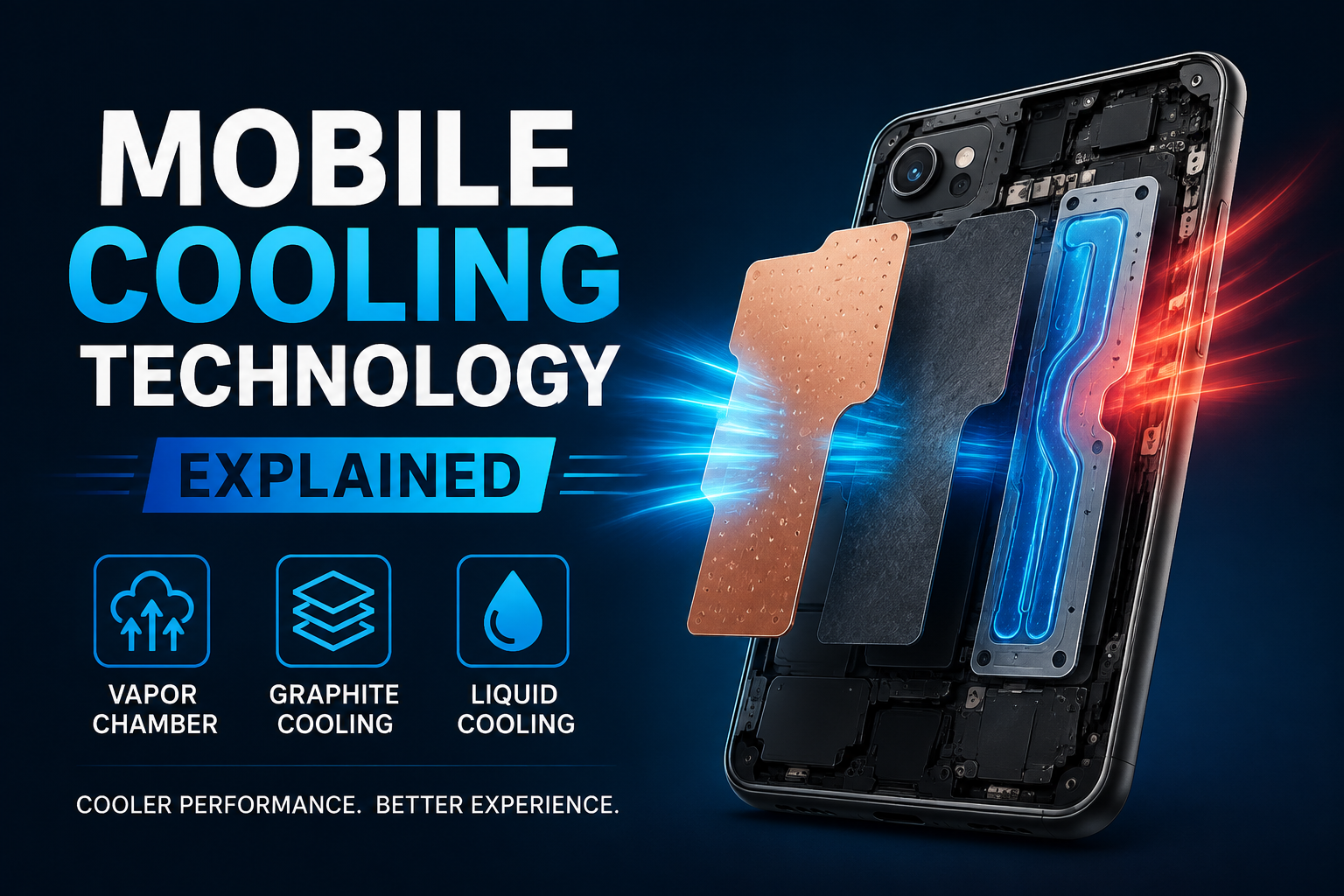
Benchmark scores can be useful when comparing processors, but they should not be the only measurement of smartphone performance. Real-world performance includes how quickly applications open, how smoothly the phone handles multitasking, whether games maintain stable performance, how quickly the camera processes photographs and how the device performs after extended use. Thermal management is particularly important because excessive heat can affect sustained performance and battery efficiency. When comparing the best smartphone in 2026, try to look for long-term or real-world testing rather than relying entirely on benchmark numbers.
Consider Your Daily Screen Time
Your daily screen time should also influence your smartphone choice. If you spend several hours watching videos, browsing social media, playing games or working from your phone, display quality and battery life become particularly important. A comfortable display with good brightness, appropriate refresh rate and accurate colours can make extended use more enjoyable. Similarly, a battery that can comfortably last through your normal day can reduce the need to constantly search for a charger. Therefore, heavy users should give greater importance to display quality, battery endurance and charging convenience.
Think About Storage for the Next Few Years
Choosing storage based only on your current requirements can sometimes create problems later. Smartphone applications, games, photographs and high-resolution videos continue to become larger. If you frequently record videos, download movies, store photographs or install large games, your storage requirements may increase significantly over time. When looking for the best smartphone in 2026, consider how much storage you are likely to need throughout the phone’s expected lifespan rather than choosing the cheapest storage variant today. For many users, moving from 128GB to 256GB can provide additional flexibility for long-term use.
Check Whether the Charger Is Included
The charging experience is another detail that buyers sometimes overlook. Some smartphones may not include a charging adapter in the retail box, while others may include one depending on the market or model. Before purchasing, check exactly what is included in the box. If a charger needs to be purchased separately, add its cost to your overall smartphone budget. Also make sure the charger supports the appropriate charging standard and power level for the smartphone.
Check Repairability and Replacement Costs
The purchase price is only one part of the cost of owning a smartphone. Accidental screen damage, battery degradation, charging-port problems or other hardware issues can result in additional expenses. Before buying the best smartphone in 2026 for your needs, consider the availability and approximate cost of important replacement parts such as the display and battery. A smartphone that is slightly cheaper to purchase but significantly more expensive to repair may not provide the best long-term value.
Check Privacy and Security Features
Privacy and security should also be part of your smartphone buying decision. Modern phones may provide features such as biometric authentication, secure folders, app permissions, encrypted storage and theft-protection tools. If you use your smartphone for banking, online payments, business communication or storing personal information, security should be considered alongside performance and camera specifications. Also check how frequently the manufacturer provides security updates and how long those updates are expected to continue.
Don’t Forget Audio Quality
Audio is sometimes overlooked when comparing smartphones, but it can have a major impact on everyday use. If you frequently watch videos, listen to music, attend video meetings or play games without headphones, check the quality of the built-in speakers. Stereo speakers, clear voice reproduction and good volume can significantly improve the overall multimedia experience. Headphone connectivity and Bluetooth audio support may also be important depending on your accessories.
Consider Weight and Comfort
A smartphone can have excellent specifications but still feel uncomfortable if it is too large or heavy for your daily use. Before choosing the best smartphone in 2026, consider its dimensions, weight, thickness and overall design. If you frequently use your phone with one hand, a smaller and lighter model may be more comfortable. If you watch a lot of videos or work on your phone, a larger display may be more useful. Whenever possible, physically holding the phone in an offline store can help you understand its comfort better.
Check Network Compatibility Before Buying
If you are purchasing a smartphone from another country or importing a particular model, carefully check its supported network bands before making a purchase. A phone may support 5G but still lack compatibility with certain network bands used by your mobile operator. Regional versions can also differ in connectivity, SIM support, eSIM availability and other features. Checking compatibility before purchase can prevent connectivity problems later.
Consider the Resale Value
If you frequently upgrade your smartphone, resale value can also influence the total cost of ownership. Some brands and models may retain their value better than others because of brand reputation, software support, demand and hardware condition. Keeping the original box, accessories, invoice and maintaining the phone in good condition can also help when selling it later. Therefore, when comparing the best smartphone in 2026, consider not only the purchase price but also how much value the phone may retain over time.
Look at the Complete Ownership Experience
The best smartphone is more than a collection of specifications. A good smartphone should provide a balanced ownership experience from the day you purchase it until the day you eventually replace it. Performance, camera quality, battery life, software updates, durability, service availability, repair costs, accessories and resale value all contribute to the overall experience. Considering these factors together can help you identify the best smartphone in 2026 for your individual requirements rather than simply choosing the phone with the longest specification list.
A Simple Rule: Prioritize What You Use Most
If you are confused by too many specifications, use a simple rule: prioritize the features you use every day. A gamer should give more importance to performance, cooling and display responsiveness. A photographer should focus on camera quality and image processing. A business user may prioritize battery life, security and software support. A student may prefer affordability, durability, battery life and storage. By identifying your top three priorities before shopping, you can compare smartphones more efficiently and avoid paying extra for features you may never use.
Table of Contents
What Makes a Smartphone the Best Choice in 2026?
There is no single smartphone that can be considered the best for everyone.
The right smartphone should provide a good balance between:
- Price
- Performance
- Display quality
- Camera capabilities
- Battery life
- Charging speed
- Software experience
- Software update support
- Storage
- Connectivity
- Build quality
- After-sales service
- Long-term value
Therefore, the definition of the best smartphone in 2026 depends on how you use your phone.
A student may prioritize battery life, display quality and affordability, while a mobile gamer may focus on the processor, GPU, cooling system and refresh rate. A content creator may prioritize cameras, video recording and storage, while a business user may prefer security, software support and reliability.
1. Decide Your Budget Before Choosing a Smartphone

The first step in choosing the best smartphone in 2026 is deciding how much you are comfortable spending.
Do not start by comparing expensive flagship smartphones if your actual budget is limited. Instead, set a realistic price range and compare smartphones within that range.
You can broadly divide smartphones into the following price segments:
| Price Segment | Suitable For |
|---|---|
| Entry-level | Calling, messaging and basic applications |
| Budget | Students and everyday users |
| Mid-range | Performance, cameras and everyday productivity |
| Upper mid-range | Heavy users wanting near-flagship features |
| Premium | Advanced cameras, performance and design |
| Ultra-premium | Enthusiasts and users wanting maximum features |
Remember that a higher price does not automatically mean a better smartphone for your requirements.
A good mid-range phone can sometimes be a better purchase than an expensive flagship if it provides everything you actually need.
Buying Tip
Set a maximum budget before comparing models. Also consider the cost of a protective case, screen protector, charger, insurance and other accessories.
2. Choose the Right Processor for Your Usage
The processor is one of the most important components of a smartphone because it affects performance, gaming, multitasking, camera processing and power efficiency.
However, you should not select a phone simply because it has the newest or most powerful processor.
For everyday activities such as:
- YouTube
- Web browsing
- Online payments
- Calling
- Basic photography
you may not need the most powerful flagship chipset.
For gaming, video editing, heavy multitasking and demanding applications, a more powerful processor becomes more important.
What Should You Check?
Consider:
- Processor generation
- CPU performance
- GPU performance
- Manufacturing technology
- Power efficiency
- Thermal management
- Sustained performance
A processor that performs extremely well in short benchmark tests but slows down significantly because of heat may not provide the best real-world experience.
For Gaming
If gaming is your priority, look beyond the processor name.
Check the:
- GPU
- Cooling system
- Display refresh rate
- Touch response
- Sustained performance
- Battery capacity
- Charging speed
- Gaming software features
This will help you find the right gaming smartphone in 2026 rather than simply choosing a phone with the highest benchmark score.
3. Don’t Ignore RAM and Storage
RAM helps a smartphone handle multiple applications and tasks.
For normal users, extremely high RAM capacity is not always necessary. Instead, consider the combination of RAM, processor and software optimization.
If you frequently:
- Switch between many applications
- Edit videos
- Play demanding games
- Use productivity applications
- Multitask heavily
then choosing a higher RAM configuration can make sense.
Storage Is Equally Important
Modern smartphones can produce large photographs and high-resolution videos, so storage can fill up quickly.
Common storage options include:
- 128GB
- 256GB
- 512GB
- 1TB
If you record a lot of high-resolution video, download large games or store many photos and videos locally, 256GB or more may be a better long-term option.
Buying Tip
Do not choose extra RAM simply because the number looks impressive. Choose the configuration that matches your actual usage.
4. Choose the Right Display
The display is one of the features you interact with every day, so it deserves significant attention when choosing a smartphone.
Important display specifications include:
- Screen size
- Resolution
- Panel technology
- Refresh rate
- Peak brightness
- Touch response
- HDR support
- Colour accuracy
- Display protection
OLED and AMOLED displays are widely used in modern smartphones because they can provide deep blacks, strong contrast and vibrant colours.
A higher refresh rate can also make scrolling and animations feel smoother.
However, refresh rate alone should not determine your purchase.
Check Brightness Carefully
Peak brightness is particularly important if you frequently use your smartphone outdoors.
A display that looks excellent indoors may become difficult to view under strong sunlight if its brightness is insufficient.
What Should You Choose?
For general users, look for a good-quality OLED or AMOLED panel with a smooth refresh rate and sufficient outdoor brightness.
For gaming, pay more attention to refresh rate and touch response.
For movie and video lovers, prioritize display quality, HDR capabilities, speakers and colour reproduction.
5. Camera: Don’t Judge a Phone by Megapixels Alone
Camera specifications are among the most misunderstood smartphone features.
A 200MP camera does not automatically produce better photographs than a 50MP camera.
Image quality depends on several factors, including:
- Sensor size
- Lens quality
- Image processing
- Optical image stabilization
- Dynamic range
- Low-light performance
- Autofocus
- Telephoto capability
- Video stabilization
- Software algorithms
This is why you should not choose the best camera phone in 2026 based solely on megapixel numbers.
Main Camera
The main camera is usually the most important camera for everyday photography.
Look for good image processing, dynamic range, autofocus and low-light performance.
Ultra-Wide Camera
An ultra-wide camera is useful for:
- Landscapes
- Buildings
- Group photographs
- Travel photography
Telephoto Camera
A telephoto camera can be particularly useful when photographing distant subjects.
Optical zoom is generally more useful than relying entirely on digital zoom.
Front Camera
If you regularly make video calls, create social media content or take selfies, check:
- Resolution
- Autofocus
- Video recording
- Stabilization
- Skin-tone processing
- Low-light performance
6. Check Video Recording Features
Photography is only one part of the camera experience.
If you create YouTube videos, Instagram Reels, short videos or travel content, pay attention to video capabilities.
Check whether the smartphone supports:
- 4K recording
- High-frame-rate recording
- Optical stabilization
- Electronic stabilization
- HDR video
- Good microphone quality
- Front-camera video
- Pro video controls
A phone with excellent photography but poor video capabilities may not be suitable for content creators.
7. Battery Life Is More Important Than Battery Size Alone
Battery capacity is generally measured in mAh, but a larger number does not automatically guarantee longer battery life.
Battery performance also depends on:
- Processor efficiency
- Display technology
- Screen brightness
- Refresh rate
- Software optimization
- Network conditions
- Gaming usage
- Background applications
A smartphone with a smaller battery but an efficient processor and well-optimized software can sometimes last longer than a phone with a much larger battery.
What Should You Look For?
For heavy users, consider:
- Large battery capacity
- Efficient processor
- Good thermal management
- Fast wired charging
- Battery protection features
Don’t compare battery capacity alone. Real-world endurance is more important.
8. Fast Charging: Useful, But Don’t Buy Only for Charging Speed
Fast charging can be extremely convenient, particularly for heavy users and people who travel frequently.
Before buying, check:
- Wired charging speed
- Wireless charging support
- Charger availability
- Charging protocol
- Heat management
- Battery protection features
Do not assume that the highest charging wattage automatically means the best battery experience.
Charging efficiency, heat control and long-term battery health are also important.
9. Software Experience Matters
Two smartphones with similar hardware can feel completely different because of their software.
Before buying a smartphone, check:
- Operating system version
- User interface
- Pre-installed applications
- Advertisements and notifications
- AI features
- Customization options
- Privacy controls
- Security features
- Software update policy
Android provides a wide range of devices and customization options, while Apple’s iPhone offers an integrated hardware and software ecosystem.
Choose the platform that fits your existing devices, applications and personal preferences.
10. Check Software and Security Updates
One of the most important factors when choosing the best smartphone in 2026 is the manufacturer’s software support policy.
A smartphone may have excellent hardware today, but limited software support can reduce its long-term value.
Before buying, check:
- Number of operating system updates
- Security update duration
- Update frequency
- AI feature support
- Whether advertised features will remain supported
If you plan to keep your smartphone for four or five years, software support becomes especially important.
11. AI Features Are Becoming More Important
Artificial intelligence is becoming a major part of the smartphone experience.
AI features may include:
- AI photo editing
- Object removal
- Generative image tools
- Voice transcription
- Translation
- Writing assistance
- AI search
- Call assistance
- Summarization
- Personalized recommendations
However, don’t buy a smartphone simply because its marketing material contains the word “AI.”
Ask yourself:
Will I actually use these AI features?
If not, prioritize performance, battery life, camera quality, software support and durability.
12. Check 5G and Connectivity
Connectivity is another important factor when choosing the best smartphone in 2026.
Before purchasing, check the exact network bands supported by the model you are considering.
Important connectivity features include:
- 5G
- 4G
- Wi-Fi
- Bluetooth
- NFC
- GPS
- USB Type-C
- Dual SIM
- eSIM
Don’t assume every phone within the same series has identical connectivity support. Regional variants can have different specifications.
13. Build Quality and Durability
A smartphone is an expensive electronic device that you may use every day for several years.
Therefore, build quality matters.
Look for:
- Strong frame
- Quality materials
- Display protection
- Water and dust resistance
- Reliable buttons
- Strong charging port
- Durable hinges on foldable phones
If you frequently travel or work outdoors, durability may be more important than having the thinnest smartphone possible.
14. Don’t Forget After-Sales Service
After-sales service is an important consideration, particularly when purchasing smartphones in India.
Before buying, check whether the manufacturer has:
- Authorized service centers near you
- Reliable warranty support
- Genuine replacement parts
- Screen replacement options
- Battery replacement support
- Convenient repair procedures
A smartphone with excellent specifications can become frustrating if obtaining service is difficult.
15. Consider the Smartphone Ecosystem
If you already own other devices, ecosystem compatibility can influence your decision.
You may already use:
- Wireless earbuds
- Smartwatch
- Tablet
- Laptop
- Cloud storage
- Smart home devices
Before switching platforms, check whether your existing accessories and services will work properly.
A good ecosystem can improve convenience through:
- File sharing
- Cross-device synchronization
- Calls across devices
- Clipboard sharing
- Cloud backups
- Device tracking
16. Choose the Smartphone According to Your Usage
Instead of asking:
“Which is the best smartphone in 2026?”
ask:
“Which smartphone is best for my needs?”
This simple change can help you make a much better buying decision.
Best Smartphone for Students
Prioritize:
- Affordable price
- Battery life
- Good display
- Reliable performance
- 5G
- Good storage
- Long software support
Best Smartphone for Gamers
Prioritize:
- Powerful processor
- Strong GPU
- Efficient cooling
- High-refresh-rate display
- Good touch response
- Large battery
- Fast charging
Best Smartphone for Photography
Prioritize:
- Large camera sensor
- Good image processing
- OIS
- Telephoto camera
- Ultra-wide camera
- Night photography
- High-quality video recording
Best Smartphone for Business Users
Prioritize:
- Battery life
- Security
- Reliable software
- Long update support
- Good connectivity
- Productivity features
- Strong build quality
Best Smartphone for Content Creators
Prioritize:
- Excellent cameras
- 4K video
- Stabilization
- Large storage
- Fast processor
- Good microphone performance
- High-quality display
17. Consider EMI, Cash Payment and the Total Cost
When choosing the best smartphone in 2026, the purchase price is not the only financial factor to consider.
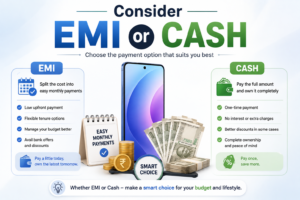
Buyers generally have the option of paying the full amount in cash or using an EMI plan, depending on the seller and available payment options.
Cash payment can be a good choice if you have already saved enough money and want to avoid interest or additional charges. EMI, meanwhile, can make a premium smartphone more manageable by spreading the payment across several months.
Before choosing an EMI plan, carefully check:
- Interest rate
- Processing fee
- Down payment
- Total repayment amount
- EMI duration
- Offer conditions
A smartphone that appears affordable because of a low monthly EMI may cost more over the complete repayment period.
Therefore, when comparing the best smartphone in 2026, compare the total amount you will pay, rather than focusing only on the monthly installment.
You should also consider discounts available through:
- Bank offers
- Exchange programs
- Cashback
- Seasonal sales
- Brand promotions
Sometimes, a slightly more expensive smartphone can become a better deal after applying an exchange or bank offer.
However, don’t purchase a phone simply because a discount is available. The best smartphone in 2026 should still provide the performance, camera quality, battery life, software support and features you actually need.
Consider the Total Cost of Ownership
In addition to the smartphone price, you may need to purchase:
- Protective case
- Screen protector
- Charger
- Wireless accessories
- Insurance
- Extended warranty
Considering these additional expenses can help you create a realistic smartphone budget.
If you are purchasing a smartphone on EMI, make sure the monthly payment comfortably fits your budget.
Don’t choose an expensive smartphone simply because the EMI looks small.
18. Should You Buy a Smartphone Online or From an Offline Store?
When searching for the best smartphone in 2026, choosing where to purchase the phone is almost as important as choosing the model itself.
Buyers generally have two options: an online store or an offline retail shop.
Both options have advantages, and the better choice depends on your priorities, budget and shopping preferences.
Buying a Smartphone Online
Online shopping can be convenient if you already know which smartphone you want.
Online stores often provide:
- Detailed specifications
- Customer reviews
- Price comparisons
- Exchange offers
- Bank discounts
- Seasonal promotions
- Multiple storage variants
During major sales events, buyers may also find attractive discounts on smartphones and accessories.
Another advantage is that you can compare several models without visiting different stores.
This makes online shopping particularly useful for buyers who have already researched the best smartphone in 2026 and know exactly which model they want.
Be Careful When Buying Online
Purchase only from a reliable and authorized seller whenever possible.
Before placing an order, check:
- Seller rating
- Return policy
- Replacement policy
- Warranty information
- Product authenticity
- Model number
- Regional variant
- Delivery conditions
Avoid choosing an unfamiliar seller simply because the price is significantly lower.
Buying a Smartphone From an Offline Store
An offline retail store can be a better option if you want to see and experience the smartphone before purchasing it.
You can physically:
- Hold the smartphone
- Check its weight
- Examine its design
- Test the display
- Try the camera
- Check speaker quality
- Compare sizes
- Understand how comfortable it feels in your hand
Offline stores can also be useful when you are confused between two or more smartphones.
A salesperson may explain:
- Available variants
- Current offers
- Exchange programs
- EMI options
- Accessories
- Warranty information
You may also be able to take the smartphone home immediately rather than waiting for delivery.
For buyers who are less comfortable with online purchasing, an authorized offline store can provide additional confidence.
Online vs Offline: Which Is Better?
There is no single answer.
If you already know the exact model you want and find a trustworthy seller offering a genuine product at a competitive price, online shopping can be convenient and may provide attractive discounts.
If you want to physically inspect the phone, compare its size and display, test the camera or receive personal assistance, an offline store may be preferable.
| Factor | Online Store | Offline Store |
|---|---|---|
| Price comparison | Excellent | Moderate |
| Discounts | Often attractive during sales | Depends on store |
| Product testing | Usually unavailable before purchase | Available |
| Convenience | Very high | Requires store visit |
| Delivery | Required | Usually immediate |
| Personal assistance | Limited | Available |
| Exchange/EMI | Often available | Often available |
| Return process | Depends on seller | Depends on store |
| Best for | Experienced online buyers | Buyers who want to inspect the phone |
Which Option Should You Choose?
If you are an experienced online shopper, understand smartphone specifications and have already identified the best smartphone in 2026 for your needs, purchasing online from a trusted seller can be an excellent option.
If you are buying a smartphone for the first time, are unsure which model to choose or want to physically test the device before paying, visiting an authorized offline store may be better.
Regardless of where you buy, always check the:
Final price + warranty + seller authenticity + model number + storage variant + return policy + included accessories.
The cheapest deal is not always the safest deal.
19. Smartphone Specifications Checklist for 2026
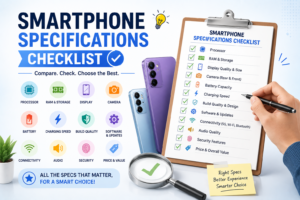
Before buying a smartphone, use this simple checklist:
| Feature | What to Check |
|---|---|
| Processor | Performance, efficiency and generation |
| RAM | Suitable for your multitasking needs |
| Storage | 128GB, 256GB or more depending on usage |
| Display | OLED/AMOLED, brightness and refresh rate |
| Main Camera | Sensor, OIS and image processing |
| Ultra-wide | Quality and autofocus |
| Telephoto | Optical zoom capability |
| Video | 4K, stabilization and audio |
| Battery | Capacity and real-world endurance |
| Charging | Speed, efficiency and heat management |
| Software | OS version and user interface |
| Updates | OS and security support |
| Connectivity | 5G, Wi-Fi, Bluetooth, NFC and USB |
| Durability | Build quality and IP rating |
| Service | Warranty and nearby service centers |
| Price | Overall value |
20. Common Mistakes to Avoid When Buying a Smartphone
Mistake 1: Buying Based Only on Megapixels
More megapixels do not automatically mean better photography.
Always consider the complete camera system.
Mistake 2: Buying the Most Expensive Phone
A flagship smartphone may offer excellent specifications, but you may not need all of them.
Buy according to your actual usage.
Mistake 3: Focusing Only on RAM
More RAM is not always better.
Software optimization and processor performance also matter.
Mistake 4: Ignoring Software Updates
A smartphone with long-term software support can provide better value over several years.
Mistake 5: Ignoring Battery Efficiency
Don’t compare battery capacity alone.
Look at real-world battery performance and processor efficiency.
Mistake 6: Ignoring Service Availability
Always check whether authorized service is available in your area before purchasing.
Mistake 7: Buying an Old Flagship Without Checking Support
Older premium smartphones can offer excellent hardware, but check their remaining software support and battery condition before buying.
Mistake 8: Choosing Only Because of a Discount
A large discount does not necessarily mean that you are getting the best value.
Always compare specifications, support, warranty and long-term ownership costs.
21. Do’s and Don’ts When Buying a Smartphone in 2026
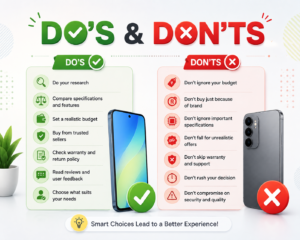
Do’s
- Do set a realistic budget.
- Do identify your main smartphone usage.
- Do compare several models.
- Do check real-world reviews.
- Do compare camera samples.
- Do check battery performance.
- Do check software update policies.
- Do verify 5G and connectivity bands.
- Do check warranty coverage.
- Do consider after-sales service.
- Do choose sufficient storage.
- Do check the exact regional variant.
- Do compare online and offline prices.
Don’ts
- Don’t buy a phone only because of its megapixel count.
- Don’t assume more RAM always means better performance.
- Don’t choose a phone solely because it has the newest processor.
- Don’t ignore software support.
- Don’t ignore battery health.
- Don’t buy based only on influencer recommendations.
- Don’t ignore negative reviews.
- Don’t purchase an unofficial or questionable variant simply to save money.
- Don’t assume every model in a series has identical specifications.
- Don’t spend more money on features you won’t use.
- Don’t choose an EMI plan without checking the total repayment amount.
22. How to Compare Two Smartphones Before Buying
If you are confused between two models, don’t compare every specification equally.
Use this five-step method.
Step 1: Compare the Price
Determine the actual price after discounts, bank offers, exchange benefits and other promotions.
Step 2: Compare Your Priority Features
If you are a gamer, prioritize performance.
If you are a photographer, prioritize cameras.
If battery life is important, prioritize endurance and efficiency.
Step 3: Check Software Support
Find out how many years of updates each smartphone is expected to receive.
Step 4: Check Long-Term Ownership
Consider:
- Battery replacement
- Accessories
- Warranty
- Repair costs
- Software support
Step 5: Choose the Better Overall Value
The smartphone with the highest specifications is not necessarily the best purchase.
The best choice is the smartphone that provides the features you actually need at a reasonable price.
23. Should You Buy a New Smartphone or Wait?
You should consider buying now if:
- Your current phone is slow.
- Battery life has become poor.
- Your phone no longer receives important updates.
- You need better cameras.
- You need better performance.
- Your current storage is insufficient.
- Your phone has hardware problems.
You may want to wait if:
- Your current phone works well.
- You don’t need new features.
- A major upgrade is expected soon.
- Your current phone still receives updates.
- You are waiting for a specific model or price reduction.
There is no universal “perfect time” to buy a smartphone.
The best time is when a new phone provides meaningful improvements for your requirements.
24. Is an Expensive Smartphone Worth Buying in 2026?
An expensive smartphone can be worth the money if you actually use its premium features.
A flagship smartphone may provide:
- Better cameras
- Faster performance
- Higher-quality display
- Premium construction
- Better speakers
- Advanced connectivity
- Longer software support
- Advanced AI features
However, if your usage mainly consists of calls, messaging, social media, video streaming and basic photography, a good mid-range smartphone may provide better value.
The best smartphone in 2026 is not necessarily the most expensive one.
Final Thoughts: Choosing the Right Smartphone in 2026
Choosing the best smartphone in 2026 is not simply about buying the phone with the highest specifications or the most expensive price tag.
The right smartphone should match your budget, daily usage, performance requirements, camera needs, battery expectations and long-term plans.
Before making a purchase, compare important factors such as the processor, RAM, storage, display, camera system, battery life, charging speed, software experience, update support, connectivity and build quality.
Also consider where you will buy the smartphone, whether you are paying by cash or EMI, the available discounts, warranty coverage and after-sales service.
Most importantly, avoid choosing a phone based on a single specification. A high megapixel camera, large RAM capacity, faster charging or powerful processor does not automatically make a smartphone the right choice for you.
The smartest approach is to identify your priorities first, set a realistic budget, compare different models and evaluate their long-term value.
Whether you are a student, gamer, photographer, content creator, business professional or everyday smartphone user, there is a suitable option for your needs.
In 2026, the smartest smartphone purchase is not necessarily the most powerful phone—it is the phone that delivers the features and experience you actually need at the right price.
Frequently Asked Questions
What is the best smartphone in 2026?
There is no single best smartphone in 2026 for everyone. The ideal choice depends on your budget and requirements, including gaming, photography, battery life, software, productivity and everyday use.
How much RAM is enough for a smartphone in 2026?
The amount of RAM you need depends on your usage. Everyday users generally don’t need the highest RAM configuration, while gamers, content creators and heavy multitaskers may benefit from more memory.
Is a high megapixel camera always better?
No. Camera quality also depends on sensor size, lens quality, image processing, stabilization, autofocus and software.
Is 5G necessary in 2026?
For buyers planning to keep their smartphone for several years, 5G is a useful feature to have. However, its importance depends on network availability and your location.
Should I buy an Android phone or an iPhone?
Both platforms have advantages. Android offers a wide range of devices and price points, while iPhone provides Apple’s integrated hardware, software and ecosystem. Choose the platform that best fits your existing devices and preferences.
How much storage should I choose?
For many users, 128GB may be sufficient, while 256GB or more is better for people who take many photos, record high-resolution videos, install large games or keep large files offline.
Is fast charging important?
Fast charging is particularly useful for heavy users and people who frequently travel. However, charging efficiency, heat management and battery longevity should also be considered.
Should I buy a smartphone for its AI features?
AI features can be useful, but they should not be your only reason for buying a smartphone. Consider performance, camera quality, battery life, software support and overall value first.
Should I buy a smartphone online or offline?
Both options have advantages. Online stores can offer convenience, price comparison and promotional deals, while offline stores allow you to physically inspect and test the smartphone before purchasing. Always choose a reliable and authorized seller.
Is buying a smartphone on EMI a good idea?
EMI can make a smartphone easier to pay for over several months, but buyers should check the interest rate, processing fee and total repayment amount. Don’t choose an expensive phone simply because its monthly EMI appears affordable.
How long should a smartphone last?
A well-maintained smartphone can remain useful for several years, but its practical lifespan depends on hardware durability, battery condition, software support and how demanding your usage is.
3 thoughts on “How to Choose the Best Smartphone in 2026: Complete Buying Guide”