


Introduction:
What is Artificial Intelligence for Business?
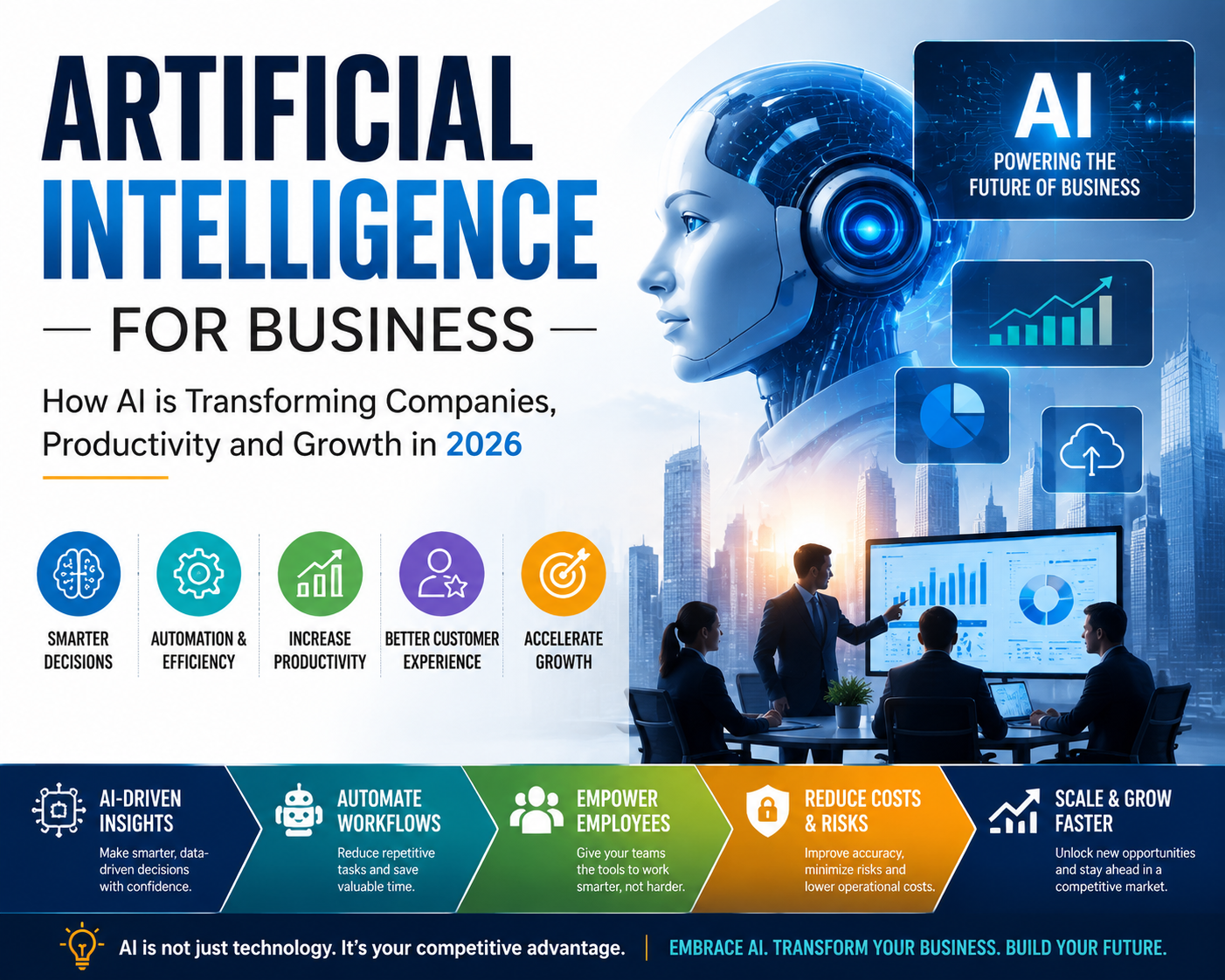
Artificial Intelligence for Business refers to the use of AI technologies, machine learning algorithms, automation systems, and intelligent software solutions to improve business operations, decision-making, customer service, and overall productivity.
In 2026, businesses across industries are rapidly adopting artificial intelligence to gain a competitive advantage. From small startups to global enterprises, AI is helping companies analyze large amounts of data, automate repetitive tasks, understand customer behavior, and create smarter business strategies.
Artificial intelligence is no longer only a technology for large organizations. Today, small businesses, retailers, marketing teams, financial companies, healthcare organizations, and manufacturers are using AI-powered tools to improve efficiency and increase revenue.
Table of Contents
Why is Artificial Intelligence Important for Business?
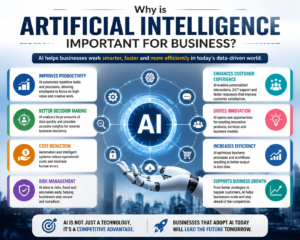
Modern businesses generate huge amounts of data every day. Traditional methods cannot always process and analyze this information quickly. Artificial intelligence helps companies convert data into valuable insights and make faster decisions.
AI technology allows businesses to:
- Automate daily business operations
- Improve customer experiences
- Reduce operational costs
- Increase employee productivity
- Predict market trends
- Improve sales and marketing strategies
- Detect risks and prevent fraud
- Create personalized customer experiences
Businesses that successfully integrate AI can adapt faster to changing markets and customer expectations.
How Artificial Intelligence is Used in Business
1. AI-Powered Customer Service and Chatbots
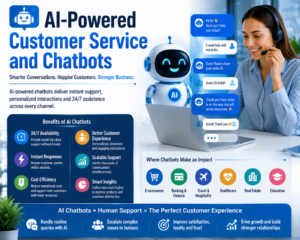
Customer service is one of the most common applications of artificial intelligence for business.
AI chatbots can answer customer questions, provide product information, solve basic problems, and offer 24/7 support without human intervention.
Businesses use AI customer service solutions to:
- Reduce response time
- Improve customer satisfaction
- Handle multiple customers simultaneously
- Provide personalized recommendations
For example, online shopping companies use AI chatbots to assist customers with product searches, order tracking, and returns.
2. AI in Business Data Analysis
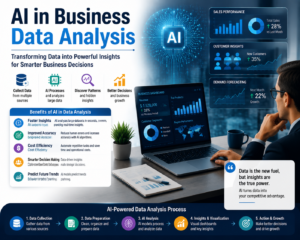
Data is one of the most valuable resources for modern businesses. Artificial intelligence helps organizations analyze large datasets and discover important patterns.
AI-powered analytics can help companies:
- Understand customer behavior
- Identify sales opportunities
- Predict future demand
- Improve business strategies
- Monitor performance
Business leaders can make better decisions using real-time AI-generated insights instead of relying only on traditional reports.
3. Artificial Intelligence for Marketing and Advertising
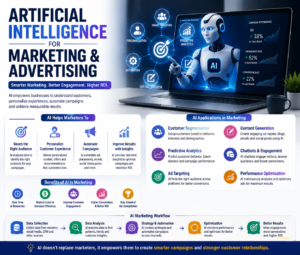
AI has completely changed digital marketing strategies.
Businesses use AI tools to create targeted marketing campaigns based on customer interests, online behavior, and purchasing patterns.
AI helps marketers with:
- Customer segmentation
- Personalized advertisements
- Content recommendations
- Email marketing automation
- Social media analysis
- Search engine optimization
With AI-powered marketing, companies can reach the right customers with the right message at the right time.
4. AI Automation for Business Operations
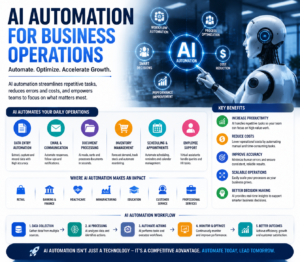
Automation is one of the biggest advantages of artificial intelligence for business.
AI-powered automation systems can handle repetitive tasks such as:
- Data entry
- Invoice processing
- Inventory management
- Scheduling
- Document processing
- Employee assistance
By automating routine work, employees can focus on creative tasks, problem-solving, and strategic activities.
5. Artificial Intelligence in Sales
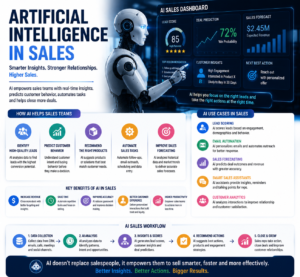
AI is helping sales teams improve performance by providing accurate customer insights.
AI sales tools can:
- Identify potential customers
- Predict customer buying behavior
- Recommend products
- Improve sales forecasting
- Track customer interactions
Retail businesses can use AI to understand customer preferences and increase conversion rates.
6. AI in Finance and Accounting
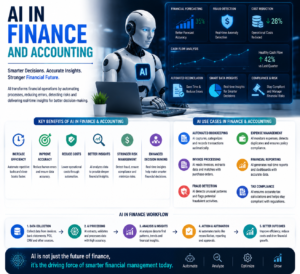
Financial organizations use artificial intelligence to improve accuracy and security.
AI applications in finance include:
- Fraud detection
- Risk analysis
- Automated accounting
- Expense management
- Financial forecasting
AI systems can analyze thousands of transactions within seconds and identify suspicious activities.
7. Artificial Intelligence in Human Resources
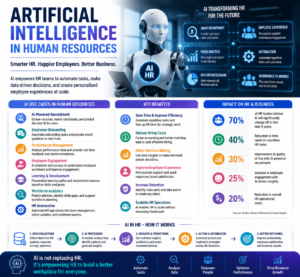
Human resource departments are also adopting AI technology to improve employee management.
AI can support HR teams through:
- Automated recruitment processes
- Resume screening
- Employee performance analysis
- Training recommendations
- Workforce planning
AI helps companies find suitable candidates faster and improve employee experiences.
Benefits of Artificial Intelligence for Business
| Benefits | Description |
|---|---|
| Increased Productivity | AI automates repetitive tasks and saves employee time |
| Cost Reduction | Businesses reduce operational expenses through automation |
| Better Decision Making | AI provides accurate data-driven insights |
| Improved Customer Experience | AI enables faster and personalized customer support |
| Higher Efficiency | Processes become faster and more accurate |
| Competitive Advantage | Companies can innovate faster than competitors |
Artificial Intelligence for Small Businesses
Many small businesses believe AI is only useful for large companies, but this is changing rapidly.
Small businesses can use AI for:
- Digital marketing
- Customer communication
- Inventory management
- Accounting automation
- Sales prediction
- Website assistance
Affordable AI tools allow small businesses to compete with larger organizations by improving efficiency and customer engagement.
Artificial Intelligence for Business: Advantages and Disadvantages
Advantages of AI in Business
1. Faster Business Decisions
AI analyzes data quickly and provides valuable insights that help managers make better decisions.
2. Improved Productivity
AI automation reduces manual work and allows employees to focus on important activities.
3. Better Customer Understanding
AI studies customer behavior and helps businesses provide personalized services.
4. Reduced Human Errors
AI systems can perform repetitive tasks with high accuracy.
5. 24/7 Business Support
AI-powered systems can operate continuously without breaks.
Disadvantages of AI in Business
1. High Implementation Cost
Advanced AI systems may require investment in software, infrastructure, and employee training.
2. Data Privacy Concerns
Businesses must protect customer and company data while using AI technologies.
3. Skill Requirements
Employees need proper training to effectively use AI tools.
4. Dependence on Technology
Overdependence on AI systems can create challenges if technical failures occur.
Artificial Intelligence vs Traditional Business Methods
| Feature | Traditional Methods | Artificial Intelligence |
| Data Processing | Slow manual analysis | Fast automated analysis |
| Decision Making | Based on limited information | Data-driven predictions |
| Customer Support | Limited working hours | 24/7 AI assistance |
| Automation | More human involvement | Automated workflows |
| Accuracy | Higher chance of errors | Improved accuracy |
Popular AI Tools for Business in 2026
Businesses are using various AI-powered platforms for different needs:
AI Writing and Content Tools
Used for:
- Blog writing
- Marketing content
- Product descriptions
- Email creation
AI Data Analytics Tools
Used for:
- Business intelligence
- Data visualization
- Forecasting
AI Customer Support Tools
Used for:
- Chatbots
- Automated responses
- Customer management
AI Productivity Tools
Used for:
- Meeting summaries
- Task management
- Workflow automation
Future of Artificial Intelligence for Business
The future of artificial intelligence for business is expected to grow significantly in the coming years.
Important AI trends include:
1. Generative AI Adoption
Businesses will increasingly use generative AI for content creation, software development, customer communication, and research.
2. AI-Powered Decision Systems
Companies will depend more on AI analytics for strategic planning and forecasting.
3. AI and Robotics Integration
Manufacturing, logistics, and retail industries will combine AI with robotics to improve automation.
4. Personalized Customer Experiences
AI will help businesses create highly customized products and services.
5. AI Security Solutions
Companies will use AI to detect cybersecurity threats and protect digital assets.
How Businesses Can Successfully Implement AI
Companies should follow these steps before adopting AI:
- Identify business problems that AI can solve.
- Choose suitable AI tools and technologies.
- Train employees to use AI effectively.
- Protect business and customer data.
- Monitor AI performance regularly.
- Continuously improve AI strategies.
Successful AI implementation requires a balance between technology and human expertise.
Artificial Intelligence in Different Business Industries
Artificial intelligence for business is not limited to a single sector. Almost every industry is adopting AI solutions to improve efficiency, reduce costs, and deliver better services.
AI in Retail Business
The retail industry is one of the biggest beneficiaries of artificial intelligence.
Retail companies use AI for:
- Customer behavior analysis
- Personalized product recommendations
- Smart inventory management
- Demand forecasting
- Automated billing systems
- Sales prediction
AI helps retailers understand what customers want and maintain the right products at the right time.
For example, AI-powered recommendation systems can suggest products based on previous purchases, browsing history, and customer preferences.
AI in Healthcare Business
Artificial intelligence is creating major improvements in healthcare services and management.
Healthcare organizations use AI for:
- Medical data analysis
- Patient management systems
- Disease prediction
- Appointment automation
- Drug research
- Healthcare chatbots
AI helps healthcare companies provide faster services while improving accuracy in diagnosis and treatment planning.
AI in Manufacturing Business
Manufacturing companies are using artificial intelligence to build smarter factories.
AI applications in manufacturing include:
- Predictive maintenance
- Quality inspection
- Production optimization
- Supply chain management
- Industrial robotics
AI systems can predict equipment failures before they happen, reducing downtime and improving productivity.
AI in Banking and Financial Services
Banks and financial companies are using AI to improve security and customer experience.
AI applications include:
- Fraud detection
- Automated customer support
- Credit risk assessment
- Digital banking assistants
- Investment analysis
AI allows financial institutions to process transactions faster and provide safer services.
Artificial Intelligence and Business Intelligence: Understanding the Difference
Many businesses confuse Artificial Intelligence (AI) with Business Intelligence (BI). Although both technologies use data, they serve different purposes.
| Feature | Artificial Intelligence (AI) | Business Intelligence (BI) |
|---|---|---|
| Main Purpose | Predict and automate actions | Analyze past and present data |
| Technology | Machine learning and algorithms | Reports and dashboards |
| Decision Support | Provides recommendations | Provides insights |
| Data Usage | Learns from data continuously | Uses structured data |
| Example | AI sales prediction | Sales performance dashboard |
Artificial intelligence helps businesses answer:
“What will happen in the future?”
Business intelligence helps answer:
“What happened and why?”
Together, AI and BI create powerful solutions for modern organizations.
Role of Machine Learning in Business Growth
Machine learning is one of the most important technologies behind artificial intelligence for business.
Machine learning allows computer systems to learn from historical data and improve their performance without being manually programmed.
Businesses use machine learning for:
- Customer prediction
- Fraud detection
- Product recommendations
- Sales forecasting
- Market analysis
For example, an online business can use machine learning algorithms to predict which products customers are most likely to purchase.
Artificial Intelligence and Big Data: A Powerful Business Combination
Modern businesses generate massive amounts of data from websites, applications, social media, and customer transactions.
Artificial intelligence combined with big data helps companies discover hidden patterns and make smarter decisions.
Benefits of AI with big data include:
- Accurate customer insights
- Better market prediction
- Improved operational planning
- Faster problem-solving
- More effective marketing campaigns
Businesses that effectively use AI and big data can create a strong competitive advantage.
Generative AI for Business Growth
Generative AI has become one of the most important developments in business technology.
Generative AI can create:
- Text content
- Images
- Marketing materials
- Product descriptions
- Reports
- Software code
- Business presentations
Companies use generative AI to increase creativity, reduce production time, and improve employee productivity.
However, businesses should review AI-generated content carefully to maintain quality, accuracy, and brand identity.
Artificial Intelligence and Cybersecurity in Business
As businesses become more digital, cybersecurity threats are increasing. Artificial intelligence plays an important role in protecting business systems.
AI-powered cybersecurity solutions can:
- Detect unusual activities
- Identify cyber threats
- Prevent fraud attempts
- Monitor network security
- Respond quickly to attacks
AI security systems can analyze millions of data points and identify potential risks faster than traditional security methods.
Challenges Businesses Must Consider Before Implementing AI
Although artificial intelligence provides many advantages, businesses should carefully plan their AI adoption strategy.
Important challenges include:
Data Quality Issues
AI systems require accurate and reliable data. Poor-quality data can produce incorrect results.
Employee Training
Companies need skilled employees who understand how to use AI tools effectively.
Ethical AI Usage
Businesses must ensure AI decisions are fair, transparent, and responsible.
Integration With Existing Systems
AI solutions should work smoothly with current business software and workflows.
Continuous Improvement
AI models need regular updates and monitoring to maintain performance.
How AI Will Change the Future Workplace
Artificial intelligence will not only change business processes but also transform the workplace environment.
Future workplaces will include:
- AI-powered digital assistants
- Automated workflow systems
- Smart collaboration tools
- Data-driven decision-making
- Personalized employee training
AI will help employees work faster and smarter by reducing repetitive tasks and supporting creative problem-solving.
The future workplace will be a partnership between humans and intelligent machines.
Key Factors for Successful AI Adoption in Business
Businesses should focus on these important factors for successful AI implementation:
Clear Business Goals
Companies should identify specific problems before selecting AI solutions.
Strong Data Management
High-quality data is the foundation of successful AI systems.
Employee Collaboration
AI works best when employees and technology work together.
Security and Privacy
Businesses must protect sensitive information while using AI.
Continuous Learning
AI technology changes quickly, so businesses must continuously improve their knowledge.
Frequently Asked Questions About Artificial Intelligence for Business
What is artificial intelligence for business?
Artificial intelligence for business means using AI technologies to automate processes, analyze data, improve decisions, and enhance customer experiences.
How can AI help small businesses?
AI helps small businesses automate repetitive tasks, improve marketing, analyze customer behavior, and increase productivity.
What are the benefits of AI in business?
Major benefits include cost reduction, faster decision-making, improved efficiency, better customer service, and increased revenue opportunities.
Is AI replacing human employees?
AI mainly supports employees by automating repetitive work and helping people focus on creative and strategic tasks.
Final Thoughts on Artificial Intelligence for Business
Artificial intelligence is becoming a core technology for modern organizations. Businesses that understand and adopt AI effectively can improve their operations, discover new opportunities, and build stronger relationships with customers.
The future of business will not be about humans versus artificial intelligence. Instead, successful companies will be those that combine human creativity with AI-powered intelligence.
Artificial Intelligence for Business is the foundation of the next generation of innovation, productivity, and sustainable growth.
Artificial Intelligence for Business is the Future of Growth
Artificial Intelligence for Business is transforming the way companies operate, communicate with customers, and make decisions.
From automation and data analysis to customer service and marketing, AI provides powerful opportunities for businesses of all sizes. Companies that adopt artificial intelligence strategically can improve productivity, reduce costs, and create better customer experiences.
In the future, AI will become an essential business technology rather than an optional advantage. Organizations that start adopting AI today will be better prepared for the digital business world of tomorrow.
Artificial Intelligence for Business is not just about automation; it is about creating smarter, faster, and more successful businesses.
3 thoughts on “Artificial Intelligence for Business: How AI is Transforming Companies, Productivity and Growth in 2026”